

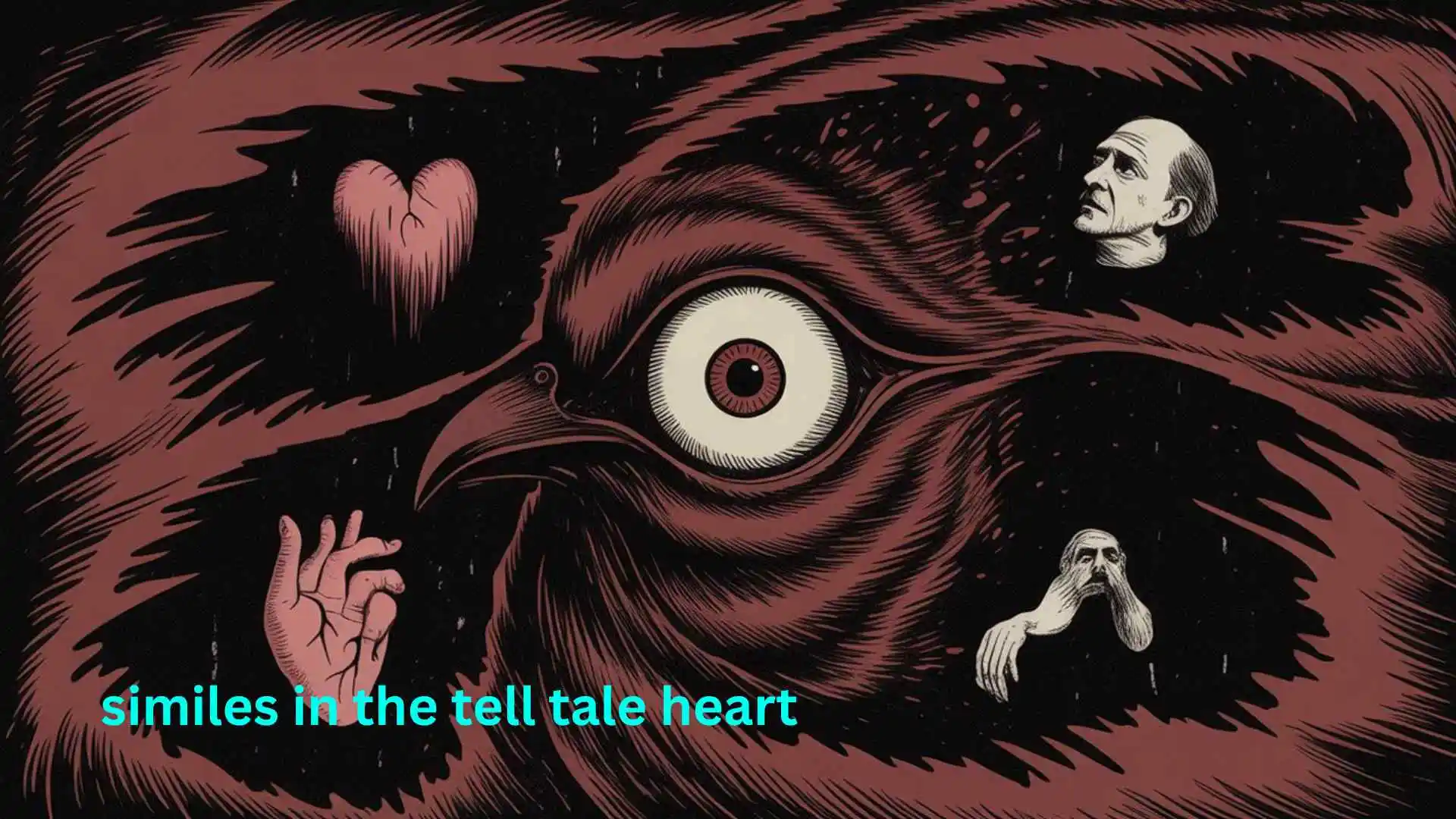
Similes in The Tell-Tale Heart help readers experience the narrator’s intense emotions and suspense by comparing feelings and actions to familiar things.
In my thoughts, these similes make the story more thrilling, vivid, and psychologically intense, letting us feel the narrator’s obsession and fear.
The following sections expand on these key points and guide you toward the choices related to similes in The Tell-Tale Heart.
Quick Understanding
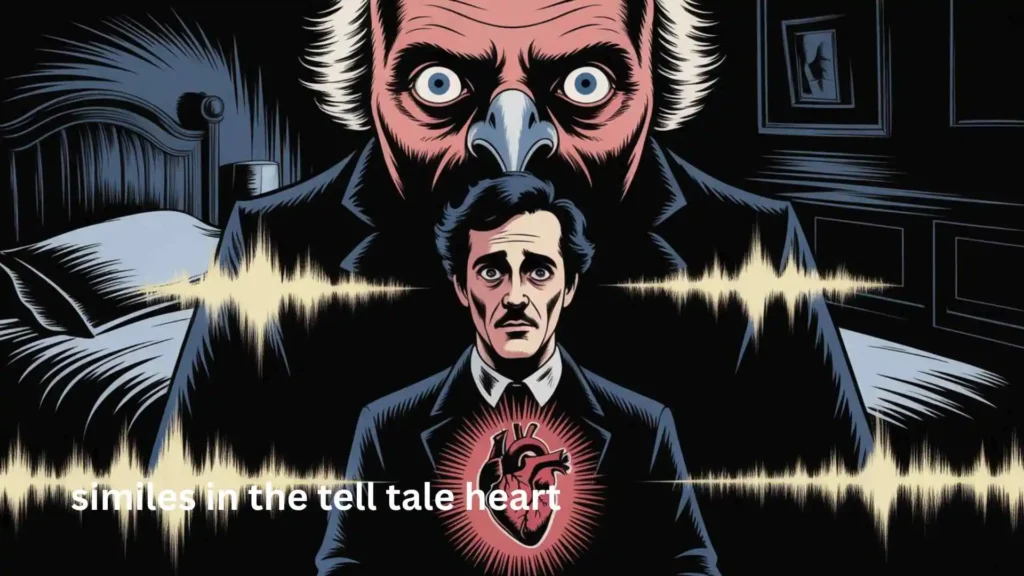
Similes work by comparing one thing to another using “like” or “as” to make descriptions stronger and easier to picture. For example, “his eyes were like burning coals” makes fear vivid, while “the night was as silent as a tomb” shows quiet intensity. By using simple comparisons from everyday life, similes help readers feel and imagine the scenes more clearly.
Personification in The Tell-Tale Heart
This section explores how the narrator describes objects and ideas as if they were alive.
In The Tell-Tale Heart, the storyteller gives human behavior to sounds, darkness, and the beating heart to show fear and guilt.
• The heartbeat cried like a terrified witness
Meaning: The narrator imagines the heart acting like a person revealing the crime.
• The silence watched him like a suspicious guard
Meaning: The quiet room feels alive and aware of his actions.
• The darkness breathed like a living creature
Meaning: The narrator feels surrounded by a presence inside the room.
• The night listened like a curious neighbor
Meaning: He believes the outside world might hear his secret.
• The floor waited like a patient judge
Meaning: The place where he hides the body seems aware of the crime.
• The walls leaned in like whispering witnesses
Meaning: His paranoia makes the room feel alive and accusing.
• The lantern blinked like a cautious eye
Meaning: The small light appears to react to the narrator’s movements.
• The clock ticked like a nervous listener
Meaning: Even ordinary sounds seem aware of his guilt.
• The heartbeat argued like an angry accuser
Meaning: The sound pressures him emotionally until he confesses.
• The room stared like a silent jury
Meaning: He feels judged by the space around him.
Examples of similes in the tell tale heart
This section highlights direct comparisons used in the story.
Similes help readers picture the narrator’s fear, obsession, and tension through familiar images.
• The old man’s eye shone like a cold blue star
Meaning: The narrator describes the eye as sharp, distant, and frightening.
• The heartbeat sounded like a drum in the night
Meaning: The noise feels loud and impossible to ignore.
• His fear crept like a shadow in the room
Meaning: Anxiety slowly spreads through the narrator’s mind.
• The silence stretched like an empty hallway
Meaning: The quiet moment feels long and uncomfortable.
• The narrator moved like a careful thief
Meaning: He acts slowly and secretly while watching the old man.
• The lantern light slid like a thin blade
Meaning: The narrow beam of light cuts through the darkness.
• The old man trembled like a leaf in wind
Meaning: Fear makes him physically shake.
• The heartbeat grew like rising thunder
Meaning: The narrator believes the sound increases rapidly.
• The room felt tight like a locked box
Meaning: The space feels trapped and suffocating.
• The narrator’s mind raced like a frightened horse
Meaning: His thoughts move wildly and uncontrollably.
List of similes in the tell tale heart
This section gathers multiple comparison examples inspired by the story’s intense scenes.
These similes help readers imagine the suspense and emotional pressure inside the narrator’s mind.
• The eye stared like frozen glass
Meaning: The narrator sees the eye as cold and lifeless.
• The night felt like a heavy blanket
Meaning: Darkness presses around the narrator.
• His steps crept like a cat in the dark
Meaning: He walks quietly while spying on the old man.
• The fear spread like cold water
Meaning: Anxiety moves quickly through his body.
• The lantern beam stretched like a thread
Meaning: The light appears thin and delicate.
• The old man’s cry burst like broken glass
Meaning: The sudden scream shocks the narrator.
• The heartbeat thumped like a war drum
Meaning: The noise seems powerful and threatening.
• The guilt grew like a storm cloud
Meaning: His conscience becomes darker and heavier.
• The room chilled like winter air
Meaning: The atmosphere feels tense and cold.
• The confession escaped like trapped smoke
Meaning: His secret finally bursts out uncontrollably.
Similes in the tell tale heart pdf
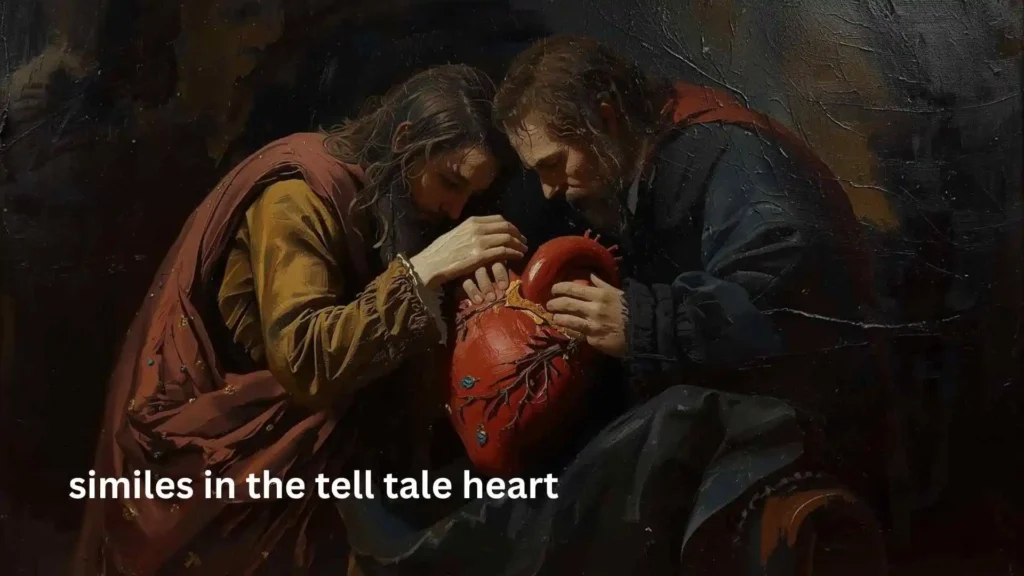
Students often search for a printable version of figurative language examples from the story.
These similes capture key emotions and moments that teachers frequently include in study guides and PDFs.
• The heartbeat echoed like a distant hammer
Meaning: The narrator hears the sound pounding repeatedly.
• The eye glowed like pale ice
Meaning: The narrator imagines it cold and frightening.
• The darkness wrapped him like thick fog
Meaning: The room hides everything in heavy shadow.
• His breath came like short waves
Meaning: Nervousness makes him breathe quickly.
• The fear struck like sudden lightning
Meaning: Panic appears suddenly and intensely.
• The bed stood like a silent guard
Meaning: The furniture feels stiff and watchful.
• The heartbeat rose like boiling water
Meaning: The narrator thinks the sound grows stronger.
• The night hung like dark curtains
Meaning: Darkness covers the scene completely.
• His thoughts jumped like sparks
Meaning: His mind moves quickly and wildly.
• The confession fell like a crashing door
Meaning: His final admission arrives suddenly and loudly.
The Tell-Tale Heart figurative language answer key
The story uses figurative language to express psychological tension.
Similes allow readers to feel the narrator’s fear, obsession, and guilt through vivid comparisons.
• The eye followed him like a silent shadow
Meaning: The narrator feels constantly watched.
• The night crept like slow smoke
Meaning: Darkness spreads gradually.
• The heartbeat pulsed like a warning bell
Meaning: The sound signals danger in his mind.
• The old man froze like a statue
Meaning: Fear makes him completely still.
• The lantern opened like a cautious eye
Meaning: The narrator reveals the light carefully.
• The tension tightened like a rope
Meaning: The moment becomes increasingly stressful.
• The fear climbed like rising water
Meaning: Panic steadily grows.
• The room closed in like a trap
Meaning: The narrator feels mentally cornered.
• The heartbeat hammered like iron tools
Meaning: The sound feels harsh and powerful.
• The guilt burned like hidden fire
Meaning: His conscience quietly grows stronger.
Hyperbole in the Tell Tale heart
Hyperbole means deliberate exaggeration for dramatic effect.
The narrator often describes sounds, feelings, and events in extreme ways to show his unstable state of mind.
• The heartbeat roared like a thousand drums
Meaning: He exaggerates the loudness because of panic.
• The silence stretched like endless space
Meaning: Waiting feels painfully long.
• His fear exploded like a mountain storm
Meaning: Anxiety suddenly becomes overwhelming.
• The eye burned like a blazing sun
Meaning: The narrator exaggerates how powerful it feels.
• The night lasted like a hundred hours
Meaning: Time feels extremely slow.
• The heartbeat thundered like crashing cannons
Meaning: He imagines the sound impossibly loud.
• His guilt weighed like a mountain
Meaning: The emotional burden feels unbearable.
• The room spun like a violent storm
Meaning: Panic distorts his perception.
• The whisper sounded like a shouting crowd
Meaning: Small noises seem huge in his mind.
• The secret pressed like a collapsing wall
Meaning: The pressure to confess becomes extreme.
Alliteration in the Tell Tale Heart
Alliteration repeats the same starting sounds to create rhythm and emphasis.
Writers often combine alliteration with imagery to strengthen suspense in dark scenes.
• Silent shadows slid like snakes
Meaning: Repeating “s” sounds create a sneaky mood.
• Dark dread drifted like dust
Meaning: The repeating “d” sound adds heaviness.
• Pale piercing pupil glared like glass
Meaning: The repeated “p” sound highlights the eye.
• Cold creeping courage moved like fog
Meaning: The sound pattern builds tension.
• Soft secret steps slipped like silk
Meaning: The repeated “s” emphasizes quiet movement.
• Faint fearful footsteps fell like feathers
Meaning: The “f” sound creates a soft rhythm.
• Grim growing guilt spread like gray clouds
Meaning: Repetition adds emotional weight.
• Dark deadly deed dropped like doom
Meaning: Strong “d” sounds stress the crime.
• Nervous narrow night closed like netting
Meaning: Repeating “n” builds suspense.
• Wicked whispering walls watched like wolves
Meaning: The “w” sound creates an eerie tone.
Personification in the tell tale heart paragraph 7
Paragraph 7 contains moments where the narrator imagines sounds and objects acting like living beings.
These descriptions reveal how guilt and fear distort his perception.
• The heartbeat shouted like an angry witness
Meaning: The narrator feels the sound exposes his crime.
• The darkness listened like a careful spy
Meaning: He imagines the night paying attention.
• The floor groaned like an old storyteller
Meaning: Normal sounds feel meaningful and suspicious.
• The lantern blinked like a nervous eye
Meaning: The light appears alive during the tense moment.
• The silence accused him like a stern judge
Meaning: Quietness increases his guilt.
• The room breathed like a restless sleeper
Meaning: The narrator senses movement in stillness.
• The walls listened like secret keepers
Meaning: He fears the environment might reveal him.
• The night waited like a patient hunter
Meaning: Darkness seems to watch the unfolding crime.
• The heartbeat argued like a stubborn voice
Meaning: The sound refuses to fade from his mind.
• The hidden body whispered like buried truth
Meaning: His conscience pushes him toward confession.
Personification in the tell tale heart paragraph 3
This section highlights how the narrator describes sounds and feelings as if they act like living things.
These similes help readers imagine the fear, guilt, and tension building inside the narrator’s mind during the final moments of the story.
• The heartbeat pounded like an angry drum in the night
Meaning: The narrator hears the sound as strong and threatening.
• The sound crept like a shadow across the room
Meaning: The noise slowly spreads in the narrator’s mind.
• The guilt rose like smoke filling a closed room
Meaning: His guilty feelings grow stronger and harder to hide.
• The noise beat like a hammer against his thoughts
Meaning: The sound becomes impossible for the narrator to ignore.
• The fear crawled like a spider across his mind
Meaning: Anxiety slowly takes control of his thinking.
• The silence waited like a watchful guard
Meaning: The quiet moment feels tense and suspicious.
• The heartbeat echoed like thunder in his ears
Meaning: The sound seems louder and more powerful to him.
• The guilt pressed like a heavy stone on his chest
Meaning: The narrator feels deep emotional pressure.
• The sound followed him like a stubborn shadow
Meaning: The narrator cannot escape the imagined noise.
• The confession burst out like a storm breaking the sky
Meaning: The narrator finally admits his crime because the pressure becomes too strong.
Main Similes Collection
- Heart pounding like a drum
Meaning: Very fast and loud heartbeat
Definition: Comparing heartbeat to a drum for strong effect
Example: My heart pounded like a drum before the exam. - Eyes sharp like an eagle’s
Meaning: Extremely observant or intense
Definition: Comparing eyes to an eagle’s to show alertness
Example: She watched the room like an eagle spotting prey. - Darkness creeping like a thick blanket
Meaning: Slowly covering everything
Definition: Comparing darkness to a blanket for imagery
Example: Night fell like a thick blanket over the city. - Voice trembling like leaves in the wind
Meaning: Shaky or nervous voice
Definition: Comparing voice to leaves for delicate trembling
Example: He whispered like leaves in the wind during his speech. - Footsteps soft like a cat’s
Meaning: Very quiet
Definition: Comparing footsteps to a cat’s for stealth
Example: She moved across the room like a cat. - Sweat dripping like a waterfall
Meaning: Lots of sweat
Definition: Comparing sweat to a waterfall for exaggeration
Example: After running, his shirt was soaked, sweat dripping like a waterfall. - Heart racing like a horse in a race
Meaning: Extremely fast heartbeat
Definition: Comparing heartbeat to a racing horse
Example: Waiting for the results, her heart raced like a horse in a race. - Mind spinning like a top
Meaning: Confused or dizzy
Definition: Comparing spinning thoughts to a top
Example: After hearing the news, his mind spun like a top. - Fear rising like steam from a kettle
Meaning: Growing quickly
Definition: Comparing fear to steam to show intensity
Example: Panic rose like steam from a kettle. - Hands shaking like jelly
Meaning: Weak or unsteady
Definition: Comparing hands to jelly for wobbly effect
Example: His hands shook like jelly when holding the trophy. - Eyes wide like saucers
Meaning: Very surprised
Definition: Comparing eyes to saucers to show shock
Example: She stared at the gift like saucers. - Voice sharp like a knife
Meaning: Cutting or harsh tone
Definition: Comparing voice to a knife for sharpness
Example: His words were like a knife to her feelings. - Silence heavy like a stone
Meaning: Very quiet and tense
Definition: Comparing silence to stone for weightiness
Example: The room fell silent like a stone. - Sweat cold like ice
Meaning: Nervous or scared
Definition: Comparing sweat to ice for chill effect
Example: He broke out in cold sweat like ice. - Night quiet like a library
Meaning: Extremely silent
Definition: Comparing night to a library for stillness
Example: The forest was like a library after sunset. - Mind alert like a hawk
Meaning: Very attentive
Definition: Comparing mind to hawk for keen observation
Example: He watched the road like a hawk. - Heart sinking like a stone
Meaning: Feeling hopeless
Definition: Comparing sadness to a stone sinking
Example: When she lost her keys, her heart sank like a stone. - Eyes gleaming like diamonds
Meaning: Shining brightly
Definition: Comparing eyes to diamonds for sparkle
Example: His eyes shone like diamonds in excitement. - Breath fast like wind
Meaning: Quick breathing
Definition: Comparing breathing to wind for speed
Example: After the race, she breathed like wind. - Sweat cold like morning dew
Meaning: Nervous and clammy
Definition: Comparing sweat to dew for freshness and chill
Example: Nervous before the speech, sweat ran like morning dew. - Heart beating like a drum
Meaning: Strong and rhythmic
Definition: Comparing heartbeat to drum for emphasis
Example: Before his turn on stage, his heart beat like a drum.
Practice Corner

Fill in the blanks with an appropriate simile:
- My hands shook ________.
- The night was ________.
- Her eyes sparkled ________.
- He tiptoed ________.
- My heart raced ________.
- Sweat ran down my back ________.
- Silence fell ________.
- Fear grew ________.
- The wind howled ________.
- My mind spun ________.
- His voice cut ________.
- The room was quiet ________.
- My heart sank ________.
- Excitement lit her eyes ________.
- He listened ________.
- She moved ________.
- Breath came ________.
- Panic rose ________.
- Tears fell ________.
- Darkness covered the streets ________.
FAQs About Similes and Metaphors in Literature
What is an example of a simile in The Tell-Tale Heart
One clear simile in The Tell-Tale Heart appears when the narrator describes the old man’s eye as “like the eye of a vulture.”
This comparison uses the word like to show how the eye reminded the narrator of a frightening bird.
The simile helps readers understand the narrator’s fear and obsession, which builds suspense in the story.
What are 5 examples of similes
Similes compare two things using words like as or like.
Here are five common examples:
- Her smile was as bright as the sun.
- The baby slept like a log.
- His voice was as smooth as honey.
- The room was as quiet as a mouse.
- She ran like the wind.
These examples help describe things more clearly and creatively.
What is a metaphor in The Tell-Tale Heart
A metaphor directly compares two things without using like or as.
In The Tell-Tale Heart, the narrator describes fear and guilt in powerful symbolic ways, such as when the beating heart represents his growing guilt.
The heart acts as a metaphor for the narrator’s conscience, showing how guilt becomes impossible to hide.
What is a simile in Anne of Green Gables
In Anne of Green Gables, similes are often used to create vivid and imaginative descriptions.
One example compares Anne’s excitement or beauty in nature to bright or lively images, such as describing something as bright as a flower in spring.
Conclusion
Similes make writing more vivid and emotional by connecting familiar things to feelings, sounds, and sights in stories like The Tell-Tale Heart. They turn ordinary descriptions into memorable imagery and help readers experience tension, fear, and suspense. Try creating your own similes today, and watch your writing come alive with emotion and detail.
Discover More Topics:
- Why Poets Love Similes and Metaphors 7 Secrets That Touch the Heart of Poetry
- Similes for Anger Set Your Emotions Ablaze in Words and Leave “Mad as a Mosquito” Behind

Alexander Vale
Hi, I’m Alexander Vale, a passionate wordsmith who loves exploring the hidden magic in language. Similes and metaphors have always fascinated me—they’re like secret bridges connecting ordinary moments to extraordinary emotions. Writing allows me to paint vivid pictures with words and invite readers into worlds both familiar and fantastical. Over the years, I’ve been captivated by how a single metaphor can spark imagination and stir the heart. My mission is to make language alive, playful, and unforgettable. When I’m not crafting sentences, you’ll find me lost in books, wandering nature, or sipping coffee while dreaming up new ideas.
Books:
-
Whispers of the Invisible
-
Metaphorically Yours