
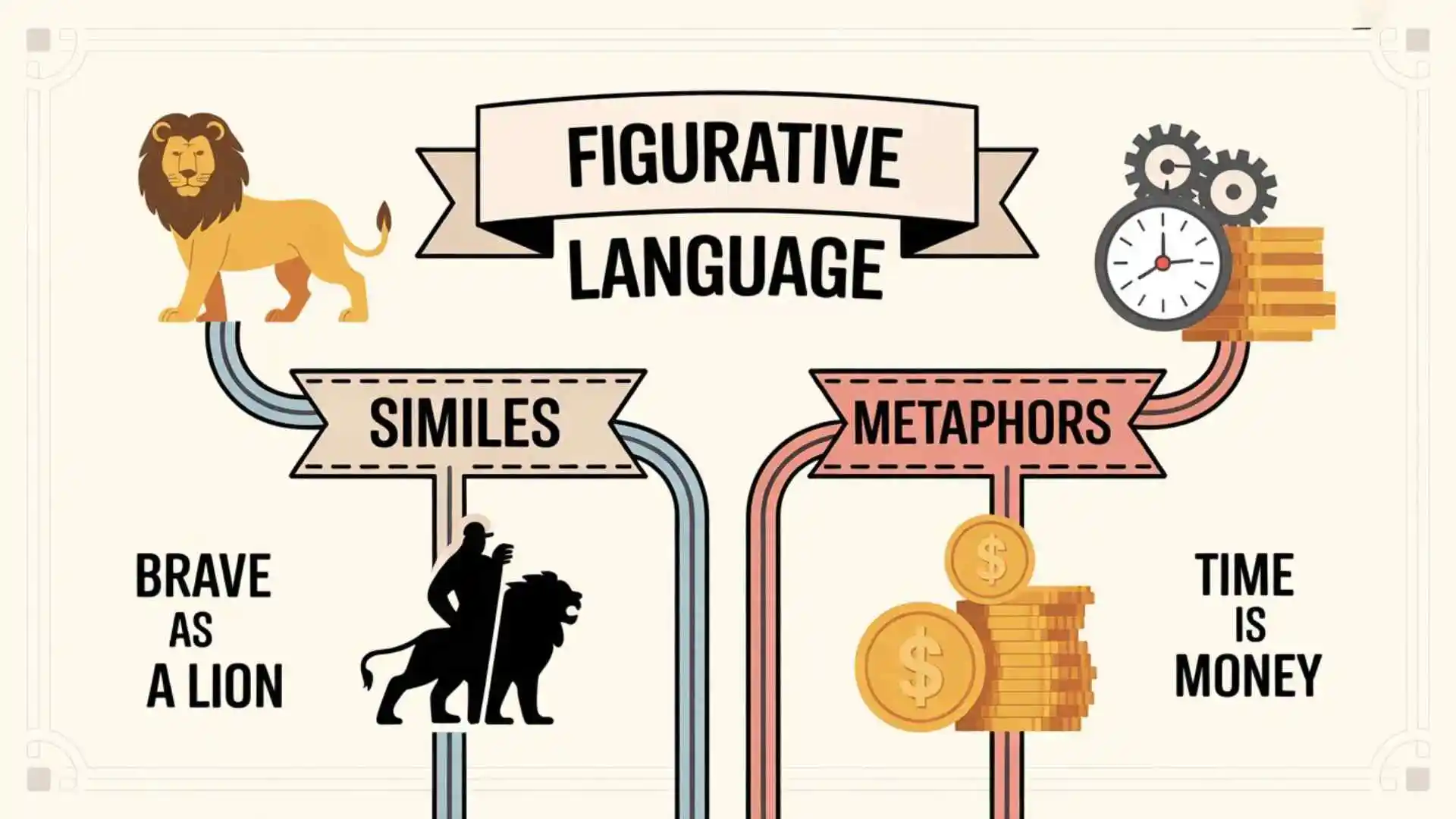
Have you ever heard someone say a child was “as busy as a bee” or that a classroom was “a zoo”?
These colorful expressions appear in everyday conversations, stories, and even social media posts.
Writers often use comparisons to make ideas clearer and more interesting.
One common way to do this is through similes, which compare two things to paint a vivid picture in the reader’s mind.
Before we explore a large collection of examples, let’s quickly understand how similes work and why they are so powerful in language.
Quick Understanding
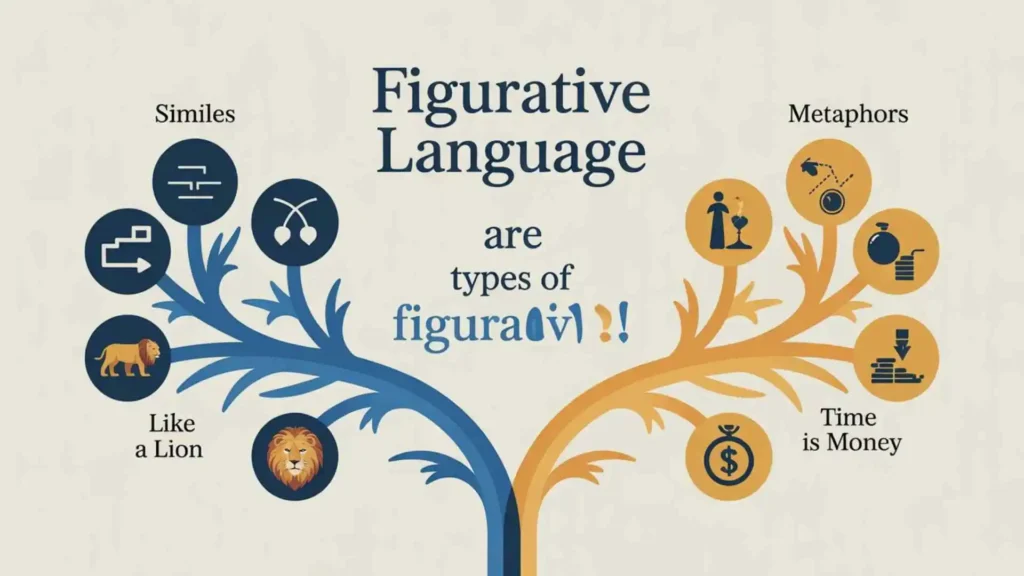
Similes compare two different things to highlight a shared quality, usually using words like “like” or “as.”
For example, saying “Her smile is like sunshine” helps us imagine warmth and happiness, while “He runs as fast as lightning” shows extreme speed.
Similes help readers see ordinary things in a fresh way, which is why they are widely used in stories, conversations, and creative writing.
The final two lines of the poem do which of the following
- The final two lines of a poem are like the closing door of a story.
Meaning: They end the poem in a clear way.
Definition: They give a final idea or feeling that completes the poem. - The final two lines of a poem are like the last brushstroke on a painting.
Meaning: They finish the whole picture.
Definition: They complete the meaning or mood of the poem. - The final two lines of a poem are like the final note of a song.
Meaning: They leave a lasting sound in the mind.
Definition: They end the poem with emotion or message. - The final two lines of a poem are like the last page of a diary.
Meaning: They wrap up personal thoughts.
Definition: They show the final feeling or message. - The final two lines of a poem are like the sunset ending a day.
Meaning: They bring calm closure.
Definition: They signal the end of the poem’s journey. - The final two lines of a poem are like the last step of a journey.
Meaning: They complete the experience.
Definition: They finish the poem’s idea or story. - The final two lines of a poem are like the final puzzle piece.
Meaning: They complete understanding.
Definition: They help the reader see the full meaning. - The final two lines of a poem are like the closing scene of a movie.
Meaning: They end the story visually and emotionally.
Definition: They wrap up the poem’s message. - The final two lines of a poem are like the final echo in a cave.
Meaning: They leave a lasting feeling.
Definition: They make the ending memorable. - The final two lines of a poem are like the final heartbeat of a story.
Meaning: They bring emotional closure.
Definition: They end the poem with strong feeling.
Which of the following is an example of a metaphor
- A metaphor is like a hidden bridge between two ideas.
Meaning: It connects two things without using “like” or “as.”
Definition: It directly says one thing is another to show meaning. - A metaphor is like a mirror that reflects deeper meaning.
Meaning: It shows hidden ideas.
Definition: It compares two things directly for effect. - A metaphor is like a shortcut in language.
Meaning: It explains ideas quickly.
Definition: It replaces one thing with another to show similarity. - A metaphor is like a painting made of words.
Meaning: It creates strong images.
Definition: It describes something as something else directly. - A metaphor is like a key that unlocks imagination.
Meaning: It helps understand deeper meaning.
Definition: It shows comparison without using “like” or “as.” - A metaphor is like a spotlight on hidden truth.
Meaning: It highlights meaning clearly.
Definition: It expresses ideas by direct comparison. - A metaphor is like a map of emotions.
Meaning: It guides understanding feelings.
Definition: It connects two different things as one. - A metaphor is like a bridge between reality and imagination.
Meaning: It connects real and creative ideas.
Definition: It states one thing is another for effect. - A metaphor is like a lens that changes how we see.
Meaning: It changes perspective.
Definition: It shows meaning through direct comparison. - A metaphor is like a story inside a single line.
Meaning: It carries deep meaning in few words.
Definition: It compares two unlike things directly.
Top similes and metaphors are both considered types of brain
- Figurative language is like fuel for the thinking brain.
Meaning: It helps the mind imagine deeply.
Definition: It improves understanding through comparison and imagery. - Similes and metaphors are like tools in a mental toolbox.
Meaning: They help explain ideas.
Definition: They shape thinking and communication. - Figurative language is like a spark in the brain’s creativity.
Meaning: It boosts imagination.
Definition: It helps the mind form new connections. - Similes and metaphors are like pathways in thought.
Meaning: They guide understanding.
Definition: They help the brain connect ideas. - Figurative language is like colors in a black-and-white mind.
Meaning: It adds detail and emotion.
Definition: It enriches thinking with imagery. - Similes and metaphors are like bridges inside the brain.
Meaning: They connect ideas.
Definition: They help understanding grow. - Figurative language is like a workout for the mind.
Meaning: It strengthens thinking skills.
Definition: It improves interpretation of meaning. - Similes and metaphors are like maps for imagination.
Meaning: They guide creative thinking.
Definition: They structure ideas in the brain. - Figurative language is like a light in mental darkness.
Meaning: It helps understanding unclear ideas.
Definition: It clarifies meaning through comparison. - Similes and metaphors are like seeds in the thinking process.
Meaning: They grow ideas.
Definition: They help the brain form deeper meaning.
Which of the following is an example of personification weegy
- Personification is like giving life to silent objects.
Meaning: It makes things act like humans.
Definition: It gives human traits to non-human things. - Personification is like a storyteller who brings objects alive.
Meaning: It makes descriptions lively.
Definition: It gives human behavior to things. - Personification is like dressing nature in human clothes.
Meaning: It adds human traits.
Definition: It shows non-human things acting human. - Personification is like a voice inside nature.
Meaning: It makes nature speak or feel.
Definition: It assigns human actions to objects. - Personification is like a heart placed in a machine.
Meaning: It gives emotion to things.
Definition: It treats objects like humans. - Personification is like a dancing tree in imagination.
Meaning: It shows movement like humans.
Definition: It gives human actions to nature. - Personification is like a talking wind in a story.
Meaning: It gives speech to nature.
Definition: It makes non-human things act human. - Personification is like emotions inside objects.
Meaning: It adds feelings to things.
Definition: It gives human traits to ideas or objects. - Personification is like a smiling sun in the sky.
Meaning: It gives emotion to nature.
Definition: It treats non-human things as human. - Personification is like a crying sky during rain.
Meaning: It adds human emotion.
Definition: It describes nature using human behavior.
Which is an example of personification
- The wind whispered through the trees.
Meaning: The wind sounded soft.
Definition: Wind is given the human action of whispering. - The sun smiled at us.
Meaning: The day felt bright.
Definition: The sun receives a human trait. - The flowers danced in the breeze.
Meaning: They moved gently.
Definition: Flowers are described with human action. - The stars winked above.
Meaning: They twinkled brightly.
Definition: Stars receive a human action. - The clock shouted the hour.
Meaning: It rang loudly.
Definition: The clock acts like a person. - The rain tapped on the window.
Meaning: It made soft sounds.
Definition: Rain is given a human action. - The leaves clapped together.
Meaning: They rustled in the wind.
Definition: Leaves are personified. - The moon watched over us.
Meaning: It seemed present.
Definition: The moon gets a human ability. - The road called my name.
Meaning: It invited travel.
Definition: The road is personified. - The thunder growled.
Meaning: It sounded fierce.
Definition: Thunder is described like an animal or person.
What’s the poet using nonliteral language to say
- Nonliteral language is like a hidden message in words.
Meaning: It gives deeper meaning.
Definition: It uses imagination instead of direct meaning. - Nonliteral language is like a secret code in poetry.
Meaning: It needs interpretation.
Definition: It expresses ideas beyond literal words. - Nonliteral language is like painting emotions with words.
Meaning: It creates imagery.
Definition: It uses figurative meaning to show ideas. - Nonliteral language is like a dream inside writing.
Meaning: It feels imaginative.
Definition: It goes beyond exact meaning. - Nonliteral language is like a puzzle for readers.
Meaning: It needs thinking to understand.
Definition: It uses symbolic meaning. - Nonliteral language is like a mirror of feelings.
Meaning: It reflects emotions.
Definition: It expresses ideas indirectly. - Nonliteral language is like poetry speaking in symbols.
Meaning: It uses symbolic words.
Definition: It conveys meaning beyond literal sense. - Nonliteral language is like a story told in hints.
Meaning: It suggests meaning.
Definition: It avoids direct explanation. - Nonliteral language is like music without visible notes.
Meaning: It feels emotional.
Definition: It communicates through imagery and symbols. - Nonliteral language is like a cloud hiding the real meaning.
Meaning: It conceals direct meaning.
Definition: It uses figurative expression.
Top similes and metaphors are both considered types of essay
- Writing is like a bridge.
Meaning: It connects ideas clearly.
Definition: Essay writing links thoughts and information in a way that helps readers understand a topic. - An essay is like a guided tour.
Meaning: It leads readers step by step.
Definition: Essays organize information in a clear order so readers can follow the writer’s message. - A simile is like a window.
Meaning: It helps people see ideas more clearly.
Definition: Similes compare two different things using “like” or “as” to create a vivid image. - A metaphor is like a spotlight.
Meaning: It highlights an important idea.
Definition: Metaphors describe one thing as another to add deeper meaning and impact. - An essay is like a roadmap.
Meaning: It shows a clear direction.
Definition: Essays guide readers from the introduction to the conclusion through organized points. - Similes are like colorful paint.
Meaning: They make writing more interesting.
Definition: Similes add detail and imagery that help readers imagine what the writer describes. - Metaphors are like hidden treasures.
Meaning: They contain deeper meanings.
Definition: Metaphors encourage readers to think beyond the literal words and explore the message. - Writing is like planting a garden.
Meaning: It grows with care and effort.
Definition: Strong essays develop ideas carefully and present them in a meaningful way. - An essay is like a conversation.
Meaning: It shares thoughts with others.
Definition: Essays allow writers to communicate opinions, facts, and experiences to readers. - Similes and metaphors are like tools in a toolbox.
Meaning: They help writers express ideas effectively.
Definition: Both figures of speech strengthen writing by making descriptions more engaging and memorable.
I wandered lonely as a cloud is an example of
- “I wandered lonely as a cloud” is like a floating thought in the sky.
Meaning: It shows freedom and loneliness.
Definition: It compares a person to a cloud using “as,” which is a simile. - “I wandered lonely as a cloud” is like a drifting leaf in the wind.
Meaning: It shows movement and isolation.
Definition: It uses simile to compare emotions with nature. - “I wandered lonely as a cloud” is like a bird lost in the sky.
Meaning: It shows loneliness.
Definition: It compares human feeling to nature. - “I wandered lonely as a cloud” is like a wave moving alone in the sea.
Meaning: It shows solitude.
Definition: It uses simile for emotional comparison. - “I wandered lonely as a cloud” is like a star far from others.
Meaning: It shows separation.
Definition: It compares a person with a natural object. - “I wandered lonely as a cloud” is like a shadow walking alone.
Meaning: It shows isolation.
Definition: It uses “as” for comparison. - “I wandered lonely as a cloud” is like a kite drifting in empty sky.
Meaning: It shows freedom and loneliness.
Definition: It uses simile to express feeling. - “I wandered lonely as a cloud” is like a boat lost on water.
Meaning: It shows directionless movement.
Definition: It compares emotions with nature. - “I wandered lonely as a cloud” is like a wind moving without purpose.
Meaning: It shows wandering feeling.
Definition: It uses simile for emotional expression. - “I wandered lonely as a cloud” is like a dream floating in silence.
Meaning: It shows peaceful loneliness.
Definition: It compares thought with cloud using simile.
Which of the following contains an example of a simile
- She runs like the wind.
Meaning: She runs very fast.
Definition: Uses “like” for comparison. - He is as brave as a lion.
Meaning: He is very courageous.
Definition: Uses “as” for comparison. - The baby slept like a log.
Meaning: Very deep sleep.
Definition: Clear simile structure. - Her face shines like the moon.
Meaning: It looks bright.
Definition: Uses comparison word. - The water is as clear as glass.
Meaning: Very transparent.
Definition: Uses “as”. - He fought like a warrior.
Meaning: He was strong.
Definition: Simile comparison. - The room was as cold as ice.
Meaning: Extremely cold.
Definition: Uses “as”. - She sings like a bird.
Meaning: Very beautifully.
Definition: Uses “like”. - The child is as quiet as a mouse.
Meaning: Very silent.
Definition: Standard simile. - Clouds floated like cotton.
Meaning: They looked soft.
Definition: Uses “like”.
A definition of formal poetry is verse that
- Verse is like architecture.
Meaning: It needs structure.
Definition: Formal poetry follows rules. - Rhyme is like melody.
Meaning: It sounds musical.
Definition: Verse often uses rhyme. - Meter is like footsteps.
Meaning: It keeps pace.
Definition: Rhythm controls movement. - Lines are like pathways.
Meaning: They lead meaning.
Definition: Structure organizes ideas. - Stanzas are like chapters.
Meaning: They separate thoughts.
Definition: Poems use sections. - Words are like notes.
Meaning: They create sound.
Definition: Poetry uses sound patterns. - Rules are like rails.
Meaning: They guide form.
Definition: Formal poetry follows set rules. - Poems are like songs.
Meaning: They use rhythm.
Definition: Sound matters deeply. - Structure is like a skeleton.
Meaning: It gives support.
Definition: It shapes the poem. - Form is like a blueprint.
Meaning: It directs creation.
Definition: Verse follows design.
Everyday Similes Collection
• As busy as a bee
Meaning: Someone who is very active and hardworking.
Definition: A simile comparing a busy person to a hardworking bee.
Example: Maria was as busy as a bee preparing dinner for the guests.
• As cold as ice
Meaning: Extremely cold or emotionally distant.
Definition: A simile comparing coldness to ice.
Example: The water in the pool felt as cold as ice.
• As light as a feather
Meaning: Very light in weight.
Definition: A simile comparing something light to a feather.
Example: The scarf was as light as a feather.
• As brave as a lion
Meaning: Very courageous.
Definition: A simile comparing bravery to a lion.
Example: The firefighter was as brave as a lion during the rescue.
• As quiet as a mouse
Meaning: Extremely quiet.
Definition: A simile comparing silence to a small mouse.
Example: The class became as quiet as a mouse during the test.
• As bright as the sun
Meaning: Very bright or cheerful.
Definition: A simile comparing brightness to the sun.
Example: Her smile was as bright as the sun.
• As slow as a snail
Meaning: Very slow.
Definition: A simile comparing slowness to a snail.
Example: The old computer moved as slow as a snail.
• As sweet as honey
Meaning: Very kind or pleasant.
Definition: A simile comparing sweetness to honey.
Example: Grandma’s voice is as sweet as honey.
• As strong as an ox
Meaning: Extremely strong.
Definition: A simile comparing strength to an ox.
Example: He carried the heavy boxes because he is as strong as an ox.
• As tall as a tree
Meaning: Very tall.
Definition: A simile comparing height to a tall tree.
Example: The basketball player looked as tall as a tree.
• As fast as lightning
Meaning: Extremely fast.
Definition: A simile comparing speed to lightning.
Example: The runner finished the race as fast as lightning.
• As happy as a clam
Meaning: Very happy and content.
Definition: A simile comparing happiness to a calm clam.
Example: She was as happy as a clam on her birthday.
• As slippery as an eel
Meaning: Hard to catch or control.
Definition: A simile comparing slipperiness to an eel.
Example: The fish was as slippery as an eel.
• As blind as a bat
Meaning: Unable to see clearly.
Definition: A simile comparing poor sight to a bat.
Example: Without his glasses, he is as blind as a bat.
• As cool as a cucumber
Meaning: Very calm.
Definition: A simile comparing calmness to a cool cucumber.
Example: She stayed as cool as a cucumber during the exam.
• As red as a tomato
Meaning: Very red in color.
Definition: A simile comparing redness to a tomato.
Example: His face turned as red as a tomato after running.
• As clean as a whistle
Meaning: Very clean.
Definition: A simile comparing cleanliness to a clear whistle.
Example: The kitchen looked as clean as a whistle.
• As proud as a peacock
Meaning: Extremely proud.
Definition: A simile comparing pride to a peacock.
Example: He walked as proud as a peacock after winning.
• As gentle as a lamb
Meaning: Very gentle.
Definition: A simile comparing gentleness to a lamb.
Example: The puppy was as gentle as a lamb.
• As hard as a rock
Meaning: Very hard or solid.
Definition: A simile comparing hardness to rock.
Example: The bread was as hard as a rock.
• As hungry as a wolf
Meaning: Very hungry.
Definition: A simile comparing hunger to a wolf.
Example: After football practice, I was as hungry as a wolf.
• As busy as an ant
Meaning: Very hardworking.
Definition: A simile comparing activity to an ant.
Example: Workers were as busy as ants before the event.
• As clear as crystal
Meaning: Very clear.
Definition: A simile comparing clarity to crystal.
Example: The lake water was as clear as crystal.
• As loud as thunder
Meaning: Extremely loud.
Definition: A simile comparing loudness to thunder.
Example: The crowd cheered as loud as thunder.
• As warm as toast
Meaning: Very warm and cozy.
Definition: A simile comparing warmth to toast.
Example: The blanket kept me as warm as toast.
• As sharp as a knife
Meaning: Very sharp or intelligent.
Definition: A simile comparing sharpness to a knife.
Example: Her mind is as sharp as a knife.
• As smooth as silk
Meaning: Very smooth.
Definition: A simile comparing smoothness to silk.
Example: The fabric felt as smooth as silk.
• As pale as a ghost
Meaning: Very pale.
Definition: A simile comparing paleness to a ghost.
Example: He looked as pale as a ghost after the news.
• As gentle as the breeze
Meaning: Very soft and calm.
Definition: A simile comparing gentleness to a light breeze.
Example: Her voice was as gentle as the breeze.
• As playful as a kitten
Meaning: Very playful.
Definition: A simile comparing playfulness to a kitten.
Example: The puppy was as playful as a kitten.
• As bright as a star
Meaning: Very bright or talented.
Definition: A simile comparing brightness to a star.
Example: She is as bright as a star in class.
• As thin as a stick
Meaning: Very thin.
Definition: A simile comparing thinness to a stick.
Example: The stray cat looked as thin as a stick.
• As soft as cotton
Meaning: Extremely soft.
Definition: A simile comparing softness to cotton.
Example: The pillow felt as soft as cotton.
• As quick as a flash
Meaning: Very quick.
Definition: A simile comparing speed to a flash of light.
Example: He answered the question as quick as a flash.
• As calm as still water
Meaning: Very peaceful.
Definition: A simile comparing calmness to still water.
Example: The baby slept as calm as still water.
• As busy as a market
Meaning: Very crowded or active.
Definition: A simile comparing activity to a market.
Example: The street was as busy as a market.
• As dark as night
Meaning: Extremely dark.
Definition: A simile comparing darkness to night.
Example: The cave was as dark as night.
• As heavy as lead
Meaning: Very heavy.
Definition: A simile comparing weight to lead.
Example: The bag felt as heavy as lead.
• As fresh as a daisy
Meaning: Full of energy.
Definition: A simile comparing freshness to a daisy.
Example: She woke up looking as fresh as a daisy.
• As slippery as ice
Meaning: Very slippery.
Definition: A simile comparing slipperiness to ice.
Example: The road was as slippery as ice.
• As clear as day
Meaning: Very obvious.
Definition: A simile comparing clarity to daylight.
Example: The answer was as clear as day.
• As quiet as the night
Meaning: Very silent.
Definition: A simile comparing silence to nighttime.
Example: The village was as quiet as the night.
• As sharp as a razor
Meaning: Extremely sharp or clever.
Definition: A simile comparing sharpness to a razor.
Example: His memory is as sharp as a razor.
• As shiny as glass
Meaning: Very shiny.
Definition: A simile comparing shine to glass.
Example: The table was polished as shiny as glass.
• As strong as steel
Meaning: Extremely strong.
Definition: A simile comparing strength to steel.
Example: Her determination is as strong as steel.
• As colorful as a rainbow
Meaning: Very colorful.
Definition: A simile comparing colors to a rainbow.
Example: The festival decorations were as colorful as a rainbow.
• As loud as a drum
Meaning: Very loud.
Definition: A simile comparing sound to a drum.
Example: The music was as loud as a drum.
• As gentle as rain
Meaning: Very soft and calming.
Definition: A simile comparing gentleness to rain.
Example: His words were as gentle as rain.
• As free as a bird
Meaning: Completely free.
Definition: A simile comparing freedom to a flying bird.
Example: After exams, students felt as free as a bird.
• As bright as gold
Meaning: Very shiny or valuable.
Definition: A simile comparing brightness to gold.
Example: Her necklace shone as bright as gold.
Practice Corner
Fill in the blanks with a suitable simile.
- The baby slept as quiet as a ______.
- After the long hike, I was as hungry as a ______.
- The runner moved as fast as ______.
- Her dress was as smooth as ______.
- The sky at night was as dark as ______.
- The kitten was as playful as a ______.
- The water in the lake was as clear as ______.
- My backpack felt as heavy as ______.
- He stayed as cool as a ______ during the interview.
- The snow looked as white as ______.
- The child was as happy as a ______.
- The pillow felt as soft as ______.
- The teacher’s explanation was as clear as ______.
- The puppy was as gentle as a ______.
- The crowd was as loud as ______.
- The athlete was as strong as an ______.
- The scarf felt as light as a ______.
- Her smile was as bright as the ______.
- The road was as slippery as ______.
- The night was as quiet as a ______.
FAQs
What are similes and metaphors types of?
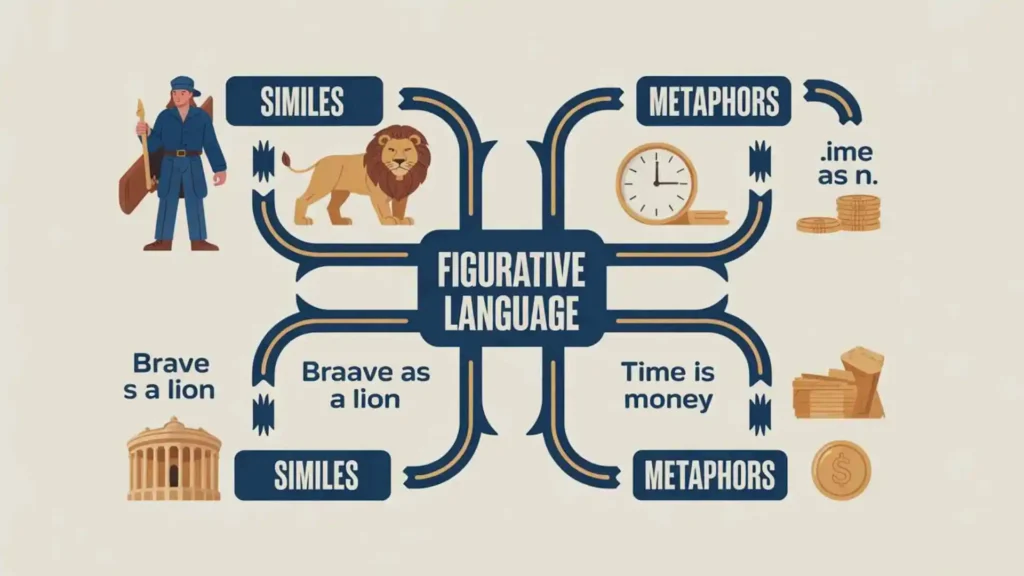
Similes and metaphors are types of figurative language. They are used to make writing more vivid, creative, and easier to understand by comparing one thing to another. A simile uses words like “like” or “as,” while a metaphor makes a direct comparison without using those words.
Are similes and metaphors both considered types of figurative language?
Yes, similes and metaphors are both considered types of figurative language. They help writers express ideas in a more imaginative way instead of using literal meanings. Both are common in poetry, stories, speeches, and everyday conversations to create stronger images in the reader’s mind.
What are the 5 types of figurative language?
The five common types of figurative language are simile, metaphor, personification, hyperbole, and idiom. A simile compares using “like” or “as,” a metaphor compares directly, personification gives human traits to non-human things, hyperbole uses exaggeration, and idioms are phrases with meanings different from the literal words.
What category do simile and metaphor fall under?
Simile and metaphor fall under the category of figurative language and literary devices. They are often used in literature, poetry, and everyday speech to make descriptions more expressive and meaningful. Their main purpose is to help readers better visualize ideas through comparisons.
What are all 12 types of figurative language?
Figurative language is writing that goes beyond literal meaning to create imagination and deeper understanding.
Here are 12 common types of figurative language:
- Simile – compares using “like” or “as”
- Metaphor – direct comparison without “like/as”
- Personification – giving human traits to non-human things
- Hyperbole – extreme exaggeration
- Alliteration – repetition of starting consonant sounds
- Onomatopoeia – words that imitate sounds
- Idiom – phrase with non-literal meaning
- Metonymy – replacing a word with a related term
- Synecdoche – part represents the whole
- Oxymoron – two opposite words together
- Pun – wordplay using multiple meanings
- Symbolism – using symbols to represent ideas
What are the 5 types of metaphors?
Metaphors come in different forms depending on how the comparison is made.
- Standard Metaphor – direct comparison (e.g., “Time is money”)
- Implied Metaphor – comparison is suggested, not stated directly
- Extended Metaphor – comparison continues over several lines or sentences
- Dead Metaphor – overused metaphor that lost impact (e.g., “foot of the mountain”)
- Mixed Metaphor – combining unrelated metaphors, often confusing
What are the 7 types of figurative language?
A simplified list often used in schools includes these 7 types:
- Simile
- Metaphor
- Personification
- Hyperbole
- Alliteration
- Onomatopoeia
- Idiom
These are the most commonly taught forms because they are easier to recognize and use in writing.
What category do similes and metaphors fall under?
Similes and metaphors fall under the category of figurative language, which is used to create vivid descriptions and express ideas in a more imaginative way. They are also commonly studied as literary devices in poetry, literature, and everyday communication.
Conclusion
Similes make language more vivid and enjoyable because they help readers imagine ideas through simple comparisons. By linking everyday objects with feelings, actions, or qualities, similes turn ordinary sentences into expressive ones. When you practice using similes, your writing becomes clearer, more creative, and easier for others to picture. Try creating your own comparisons in daily conversations or stories—you might be surprised how powerful a simple simile can be.
Discover More Topics:
- Common Metaphors | Simple Meanings Behind Daily Expressions 2026
- Similes and Metaphors | The Simple Trick That Makes Writing Beautiful 2026

Alexander Vale
Hi, I’m Alexander Vale, a passionate wordsmith who loves exploring the hidden magic in language. Similes and metaphors have always fascinated me—they’re like secret bridges connecting ordinary moments to extraordinary emotions. Writing allows me to paint vivid pictures with words and invite readers into worlds both familiar and fantastical. Over the years, I’ve been captivated by how a single metaphor can spark imagination and stir the heart. My mission is to make language alive, playful, and unforgettable. When I’m not crafting sentences, you’ll find me lost in books, wandering nature, or sipping coffee while dreaming up new ideas.
Books:
-
Whispers of the Invisible
-
Metaphorically Yours