
Have you ever seen someone text, “Bro really crashed out,” and wondered what that even means?Maybe you saw it in a TikTok comment, a Snapchat chat, or a meme and felt a little lost.
Slang changes fast, especially online, and phrases like “what does crash out mean” can carry different emotions depending on the situation.
As someone who regularly follows online language trends, memes, and Gen Z slang culture, I’ve seen this phrase pop up everywhere from TikTok videos to Discord chats.
In this guide, I’ll break it down in a simple, real-world way so you can actually understand when and how people use it.
What Does Crash Out Mean?
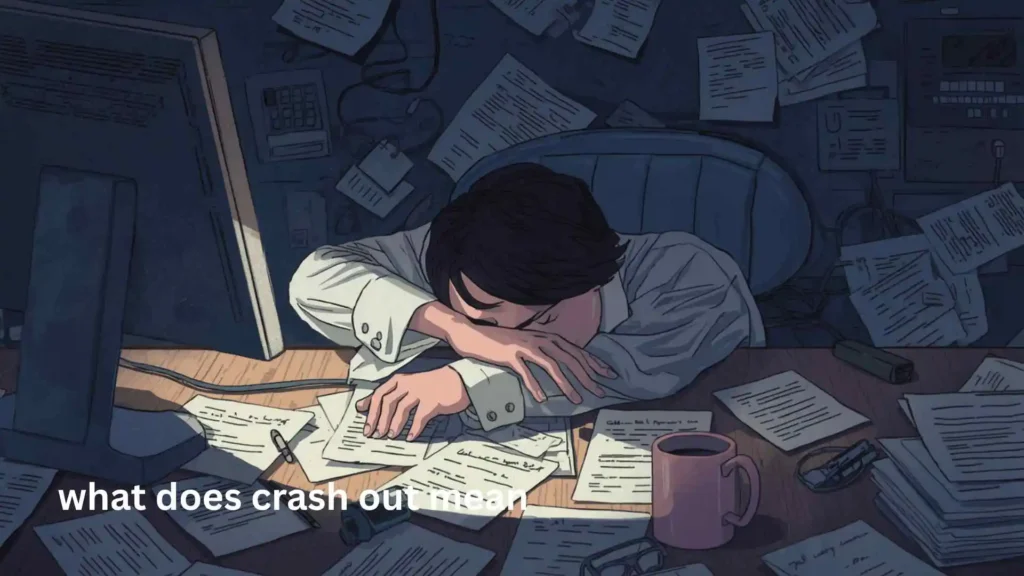
“Crash out” usually means to lose control emotionally, mentally, or physically in a sudden way.
Most commonly in slang, it describes someone snapping, breaking down, getting extremely angry, or acting recklessly because of strong emotions.
In some contexts, it can also simply mean falling asleep suddenly because of exhaustion.
The exact meaning depends on the conversation, tone, and platform.
Meaning & Definition of Crash Out
The main meaning of crash out in modern slang is when someone reaches an emotional limit.
This could mean:
- getting extremely angry
- having a mental breakdown
- reacting impulsively
- making a bad emotional decision
- losing composure publicly
For example:
Chat Example 1:
“He found out she was cheating and completely crashed out.”
This means he emotionally snapped.
Chat Example 2:
“After the exam, I just crashed out on my bed.”
Here it means falling asleep from exhaustion.
So yes, the phrase has two common meanings:
- emotional breakdown / snapping
- suddenly falling asleep
What does crash out mean in slang
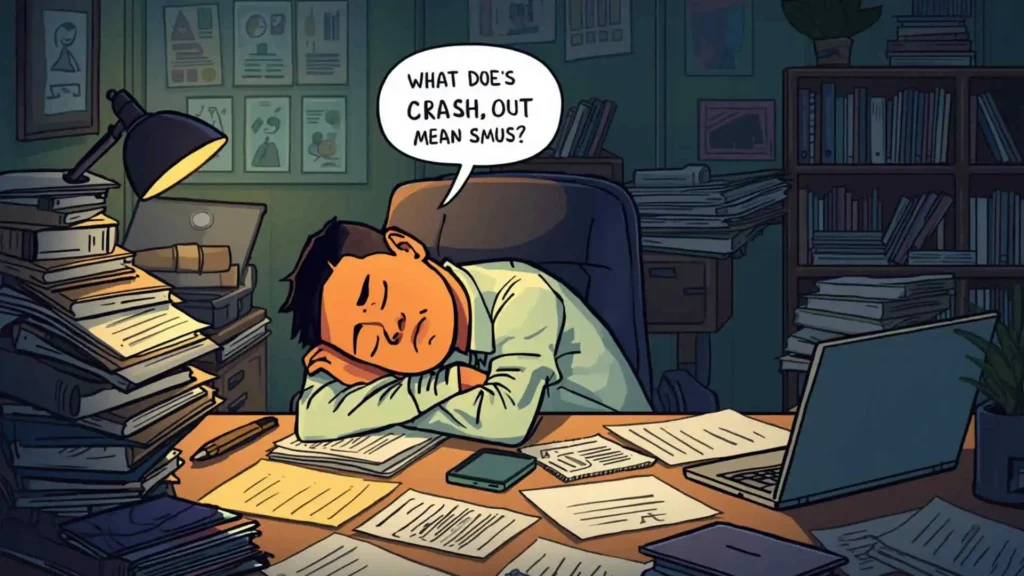
The phrase “crash out” in slang usually describes someone losing control, acting emotionally, or suddenly becoming exhausted. People often use it online, in texting, and in casual conversations. The meaning can change slightly depending on the situation and tone.
• Emotional Breakdown
Meaning: A moment when someone becomes very upset or loses emotional control.
• Mental Exhaustion
Meaning: Feeling completely drained from stress or pressure.
• Sudden Anger
Meaning: Reacting aggressively or emotionally without thinking calmly.
• Burnout
Meaning: Extreme tiredness caused by too much work or stress.
• Public Meltdown
Meaning: Losing composure in front of other people.
• Total Fatigue
Meaning: Having no energy left after physical or mental effort.
• Reckless Behavior
Meaning: Acting carelessly because of frustration or emotion.
• Emotional Collapse
Meaning: A strong emotional reaction after holding in stress.
• Shutdown Moment
Meaning: A point where someone cannot handle pressure anymore.
• Losing It
Meaning: Informal slang for becoming emotionally unstable or upset.
What does crash out mean tiktok
On TikTok, “crash out” often describes dramatic reactions, emotional moments, or people acting out online. Users commonly use the phrase in memes, trends, and reaction videos. The meaning is strongly connected to internet culture and Gen Z slang.
• Viral Meltdown
Meaning: A dramatic emotional reaction shared online.
• Online Breakdown
Meaning: Losing emotional control in digital content or comments.
• Trend Reaction
Meaning: An exaggerated response made for entertainment.
• Social Media Rage
Meaning: Angry behavior shown publicly on platforms like TikTok.
• Emotional Posting
Meaning: Sharing feelings online in an intense or dramatic way.
• Internet Burnout
Meaning: Feeling mentally tired from social media activity.
• Chaotic Energy
Meaning: Wild or unpredictable behavior in online videos.
• Dramatic Exit
Meaning: Leaving a conversation or trend in an emotional way.
• Overreaction Clip
Meaning: A video showing an exaggerated emotional response.
• TikTok Slang Term
Meaning: A modern internet phrase used by younger users online.
Crash out Urban dictionary
Urban Dictionary commonly explains “crash out” as slang connected to emotional reactions, reckless behavior, or exhaustion. The phrase may have different meanings depending on community use, internet trends, or personal interpretation.
• Street Slang
Meaning: Informal language used in casual or online conversations.
• Emotional Explosion
Meaning: A sudden release of anger, stress, or frustration.
• Acting Wild
Meaning: Behaving in a chaotic or uncontrolled way.
• Mental Pressure
Meaning: Emotional stress building up over time.
• Extreme Reaction
Meaning: Responding too strongly to a situation.
• Sleep From Exhaustion
Meaning: Falling asleep quickly because of tiredness.
• Unstable Behavior
Meaning: Acting emotionally without clear thinking.
• Internet Expression
Meaning: A phrase popular in digital communication and memes.
• Stress Response
Meaning: A reaction caused by emotional overload.
• Slang Definition
Meaning: A casual meaning explained through online culture.
What does crash out mean Gen Z
Gen Z often uses “crash out” to describe emotional overload, stress reactions, or dramatic behavior. The phrase appears in memes, texting, and social media discussions. Younger users use it casually to describe intense feelings or actions.
• Gen Z Expression
Meaning: A slang phrase popular among younger internet users.
• Emotional Overload
Meaning: Feeling unable to handle more stress or emotion.
• Drama Reaction
Meaning: A strong emotional response to a situation.
• Meme Language
Meaning: Internet slang connected to jokes and online trends.
• Mental Burnout
Meaning: Emotional and mental exhaustion from pressure.
• Losing Control
Meaning: Acting emotionally instead of calmly.
• Chaotic Mood
Meaning: A state of emotional confusion or unpredictability.
• Stress Meltdown
Meaning: Breaking down because of emotional pressure.
• Online Slang
Meaning: Informal language mainly used on social platforms.
• Emotional Crash
Meaning: A sudden drop in emotional stability or energy.
Crash out or erase
The phrase “crash out or erase” is often used online to compare emotional breakdown with completely removing something. It may appear in memes, jokes, or dramatic internet conversations. The wording usually depends on context.
• Delete Completely
Meaning: Removing something fully from memory or existence.
• Emotional Exit
Meaning: Leaving a situation after becoming overwhelmed.
• Mental Reset
Meaning: Starting over after stress or emotional pressure.
• Total Removal
Meaning: Erasing content, memories, or connections entirely.
• Breakdown Choice
Meaning: A dramatic decision between reacting or disappearing.
• Digital Deletion
Meaning: Removing online posts, accounts, or messages.
• Extreme Reaction Phrase
Meaning: A dramatic internet expression used jokingly online.
• Stress Escape
Meaning: Trying to avoid pressure or emotional discomfort.
• Online Expression
Meaning: A phrase commonly used in social media culture.
• Emotional Decision
Meaning: Choosing a strong reaction because of frustration.
Does crash out mean sleep
Yes, “crash out” can also mean going to sleep quickly because of tiredness. This meaning is older and common in casual English conversations. People often use it when they feel exhausted after work, travel, or activity.
• Fall Asleep
Meaning: Going to sleep very quickly from tiredness.
• Deep Sleep
Meaning: Sleeping heavily after exhaustion.
• Bedtime Slang
Meaning: Informal language for going to bed.
• Physical Exhaustion
Meaning: Extreme tiredness after activity or work.
• Quick Rest
Meaning: Sleeping immediately without delay.
• Nighttime Fatigue
Meaning: Feeling very tired late in the day.
• Sleep Instantly
Meaning: Falling asleep almost immediately.
• Energy Shutdown
Meaning: The body stopping activity because of tiredness.
• Resting Hard
Meaning: Sleeping deeply to recover energy.
• Informal Sleep Phrase
Meaning: Casual slang used to describe sudden sleep.
Crash out meaning relationship
In relationships, “crash out” often describes emotional conflict, stress, or a breakdown in communication. People may use it when discussing arguments, emotional reactions, or unhealthy behavior between partners.
• Relationship Breakdown
Meaning: A serious problem causing emotional distance between partners.
• Emotional Conflict
Meaning: Strong feelings leading to arguments or tension.
• Communication Failure
Meaning: Difficulty expressing thoughts calmly in a relationship.
• Trust Damage
Meaning: Harm caused to emotional trust between people.
• Heated Argument
Meaning: An intense disagreement filled with emotion.
• Emotional Reaction
Meaning: Responding strongly because of personal feelings.
• Toxic Behavior
Meaning: Harmful emotional actions affecting a relationship.
• Stress Between Partners
Meaning: Emotional pressure shared in a romantic connection.
• Sudden Separation
Meaning: Quickly ending contact or connection with someone.
• Emotional Instability
Meaning: Difficulty managing feelings during relationship problems.
Crashout or crash out
“Crashout” and “crash out” are both used online, but “crash out” is the more common spelling. Many people write it as one word in texting, slang, or social media posts. Both versions usually carry the same meaning.
• Combined Slang Word
Meaning: A shortened internet spelling written as one word.
• Informal Phrase
Meaning: Casual language used in everyday conversation.
• Social Media Term
Meaning: A phrase commonly seen in online posts and comments.
• Alternate Spelling
Meaning: Another written form of the same slang expression.
• Internet Vocabulary
Meaning: Modern language created through online communication.
• Texting Expression
Meaning: A casual phrase often used in messages and chats.
• Modern Slang
Meaning: Informal language popular with younger generations.
• Casual Internet Phrase
Meaning: A non-formal expression used online.
• Digital Communication Term
Meaning: A word connected to social media and texting culture.
• Online Slang Variation
Meaning: A different spelling style used on the internet.
Background & Origin

The phrase crash out has been around for years in casual English.
Originally, it was commonly used to mean fall asleep quickly from tiredness.
Example:
“I was so tired, I crashed out at 9 PM.”
But in recent years, especially with TikTok, meme culture, and Gen Z slang, it evolved.
Now it is widely used to describe someone losing emotional control, especially after drama, stress, rejection, or anger.
Its popularity grew through short videos, reaction memes, and comment sections where people describe overreactions.
Usage in Different Contexts

Casual Chats
Friends often use it when talking about someone overreacting.
Example:
“Don’t crash out over a small argument.”
Social Media
On TikTok and Instagram, it often appears in comments.
Example:
“Bro crashed out in 4K.”
This usually means someone embarrassed themselves publicly.
Professional Use
This phrase is not suitable for formal settings.
Instead of saying:
“The employee crashed out.”
A professional phrase would be:
“The employee became emotionally overwhelmed.”
Gaming / Group Chats
In gaming, it may describe rage quitting or emotional reactions.
Example:
“He crashed out after losing three ranked matches.”
Meanings Across Platforms
| Platform | Tone | Example |
| Casual / emotional | “Why did he crash out like that?” | |
| Meme / dramatic | “He crashed out in the comments” | |
| TikTok | Viral slang / sarcastic | “POV: you crash out over one text” |
| Snapchat | Personal / emotional | “I almost crashed out last night” |
| Discord | Gaming / rage | “He crashed out after getting banned” |
Real-Life Examples & Memes
Here are some real-style chat examples:
Example 1:
“She left him on seen and he crashed out.”
Example 2:
“One bad game and bro crashed out.”
Funny meme-style lines:
“Bro crashed out over a ‘k’ reply.”
“Imagine crashing out because she liked someone else’s post.”
These kinds of lines are very common in meme pages.
Cultural or Regional Interpretations
US / UK
In the US and UK, it strongly leans toward snapping emotionally.
Asia (India, Pakistan, Philippines)
In South Asian online chats, especially among younger users, it is commonly used in meme culture.
People may say:
“Woh to bilkul crash out ho gaya.”
Meaning someone lost emotional control.
Australia
It is less common as slang but still understood through internet culture.
Other Meanings
| Field | Meaning | Description |
| Slang | Emotional breakdown | Losing control or snapping |
| Daily speech | Sleep | Falling asleep suddenly |
| Gaming | Rage reaction | Quitting or reacting badly |
| Mental health discussion | Overwhelm | Emotional exhaustion |
Common Mistakes & Misconceptions
- Thinking it always means sleeping
- Using it in formal emails
- Assuming it is always negative
- Confusing it with “pass out”
- Using it without context
Psychological / Emotional Meaning
The emotional tone can change.
Positive
Rarely positive, sometimes used jokingly among friends.
Neutral
Used as a simple description.
Example:
“I crashed out after work.”
Negative
Most modern uses are negative.
Example:
“He crashed out after the breakup.”
Similar Terms & Alternatives
| Word | Meaning | Tone |
| Snap | Lose temper | Negative |
| Break down | Emotional collapse | Serious |
| Rage quit | Leave angrily | Gaming |
| Pass out | Lose consciousness / sleep | Neutral |
| Lose it | Become emotional | Negative |
Is It Offensive or Friendly?
It is generally not offensive, but it can sound mocking.
For example:
“He crashed out over nothing.”
This may sound judgmental.
Among friends, it can be playful.
Tone matters a lot.
Grammar or Linguistic Insight
“Crash out” is a phrasal verb.
Like many slang phrases, its meaning changed through internet culture.
This is a good example of how language evolves online.
Words often move from literal meanings (sleeping) to emotional meanings (snapping).
How to Respond
Here are natural replies:
- “What happened?”
- “Are you okay?”
- “Don’t let it get to you.”
- “Take a break first.”
- “That sounds intense.”
Differences From Similar Words
| Term | Meaning | Difference |
| Crash out | Snap or sleep | Depends on context |
| Pass out | Lose consciousness | More physical |
| Freak out | Panic | More anxiety-focused |
| Burn out | Long-term exhaustion | Slower process |
Relevance in Dating & Online Culture
In dating apps like Tinder, people may use it when someone reacts emotionally after rejection.
Example:
“He crashed out because she unmatched him.”
This is very common in Gen Z dating slang and meme culture.
Popularity & Trends
The phrase became highly popular through:
- TikTok
- Instagram reels
- Snapchat stories
- meme pages
- Gen Z humor
It often appears with sarcasm and dramatic storytelling.
When NOT to Use Crash Out
Avoid using it in:
- job interviews
- business emails
- academic writing
- formal reports
- professional meetings
Bad example:
“The client crashed out during negotiations.”
Better:
“The client became upset during negotiations.”
FAQs
What does crash out mean in slang?
It usually means someone emotionally snapped, overreacted, or lost control due to anger, stress, or sadness.
Does crash out mean sleep?
Yes, in older casual English it can mean falling asleep quickly from exhaustion.
Is crash out a Gen Z slang term?
Yes, the emotional meaning is strongly tied to modern Gen Z internet culture.
Is crash out rude?
Not necessarily, but it can sound mocking depending on tone.
Where is crash out commonly used?
Mostly on TikTok, Instagram, Snapchat, and gaming chats like Discord.
What is Gen Z crashing out?
“Gen Z crashing out” means someone is emotionally losing control, overreacting, or having a public breakdown because of stress, anger, embarrassment, or drama.
Online, the phrase is often used jokingly when someone suddenly starts arguing, crying, posting too much, or acting impulsively after a frustrating situation.
It can describe both serious emotional struggles and exaggerated internet reactions depending on the context.
What does “TikTok crash out” mean?
A “TikTok crash out” refers to a person publicly melting down or reacting emotionally on TikTok through videos, comments, livestreams, or posts.
People use the term when someone rants, exposes private issues, argues online, or behaves dramatically after becoming upset.
The phrase is usually connected to viral internet drama and is often used humorously by Gen Z users.
What does “crash out” mean in slang in Urban Dictionary?
In slang and on Urban Dictionary-style platforms, “crash out” usually means to emotionally explode, lose self-control, or react recklessly because of anger, stress, or frustration.
The term can describe someone yelling, fighting, posting aggressively online, or making impulsive decisions during an emotional moment.
In internet culture, it is often used casually or humorously rather than medically.
What does it mean to crash out mentally?
To “crash out mentally” means reaching a point of emotional exhaustion where a person feels overwhelmed, stressed, or unable to cope properly.
It can involve anxiety, emotional breakdowns, anger, burnout, or shutting down mentally after intense pressure.
Sometimes people use the phrase seriously, while other times it is exaggerated slang used online to describe everyday stress.
Conclusion
Now you know exactly what does crash out mean.
Whether it refers to someone suddenly falling asleep or emotionally snapping, the meaning depends on the situation.
Online slang keeps evolving, and understanding these phrases helps you stay connected with modern conversations and meme culture.
Have you seen someone use “crash out” in a funny way online?
Discover More Tpics:
- What Does Celibate Mean | The Real Meaning, Hidden Emotions & Modern Usage in 2026
- What Does DND Mean | Hidden Meanings, Chat Examples & Real-Life Use in 2026

Lily Anderson
Lily Anderson is a wordsmith who finds magic in the simplest of expressions. Ever since she could hold a pen, she’s been fascinated by how similes and metaphors can transform ordinary moments into something extraordinary. Writing for her is like painting with words, each sentence carefully crafted to make readers see the world through a new lens. When she’s not buried in her notebooks, Lily enjoys wandering through city streets, observing life’s tiny wonders, and collecting inspiration from everyday experiences. She believes that the right metaphor can make the heart feel a little lighter and the mind a little brighter. Lily hopes her work sparks imagination and helps readers connect more deeply with language.
Books:
-
Metaphors in Motion
-
Similes That Speak