
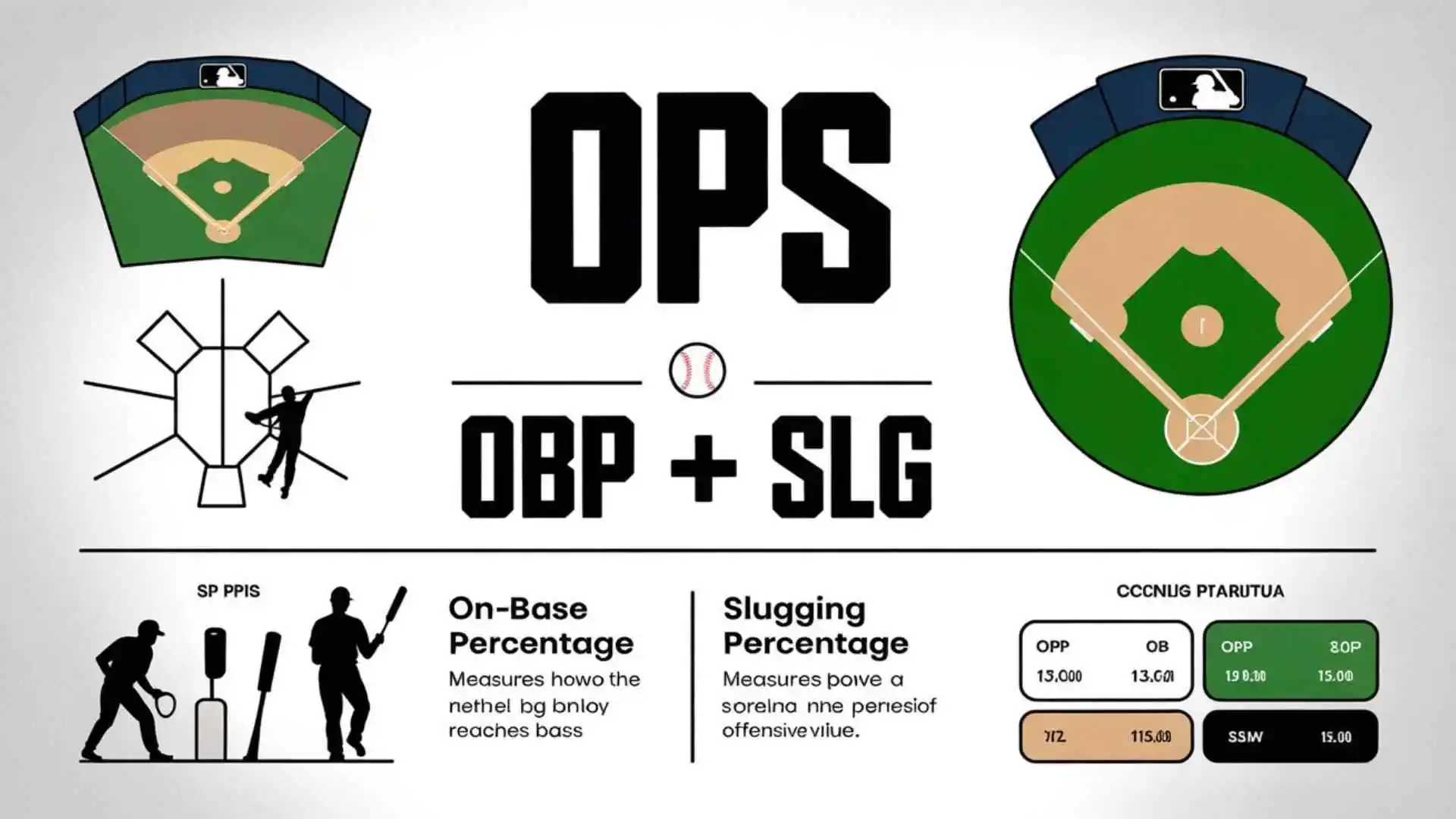
Have you ever looked at a baseball scoreboard, player card, or sports app and noticed the stat OPS next to a batter’s name?
If you’re new to baseball, it can feel confusing at first because the game is full of numbers and abbreviations. The good news is that OPS is actually one of the easiest and most useful stats to understand.
It helps fans quickly see how good a player is at getting on base and hitting for power.
As someone who regularly follows sports trends and player stats, I can tell you this is one of the first advanced baseball numbers worth learning.
What Does OPS Mean in Baseball?
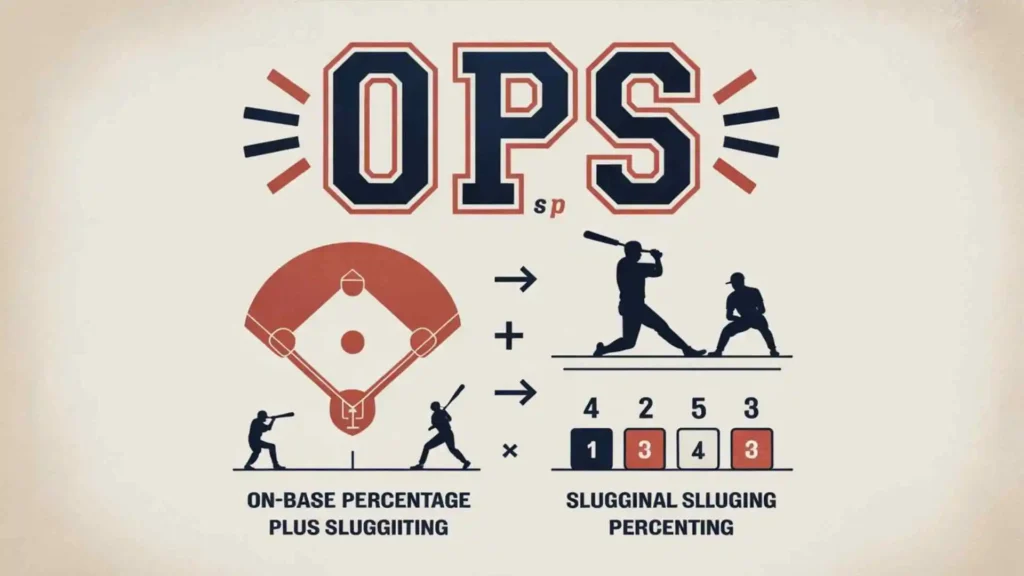
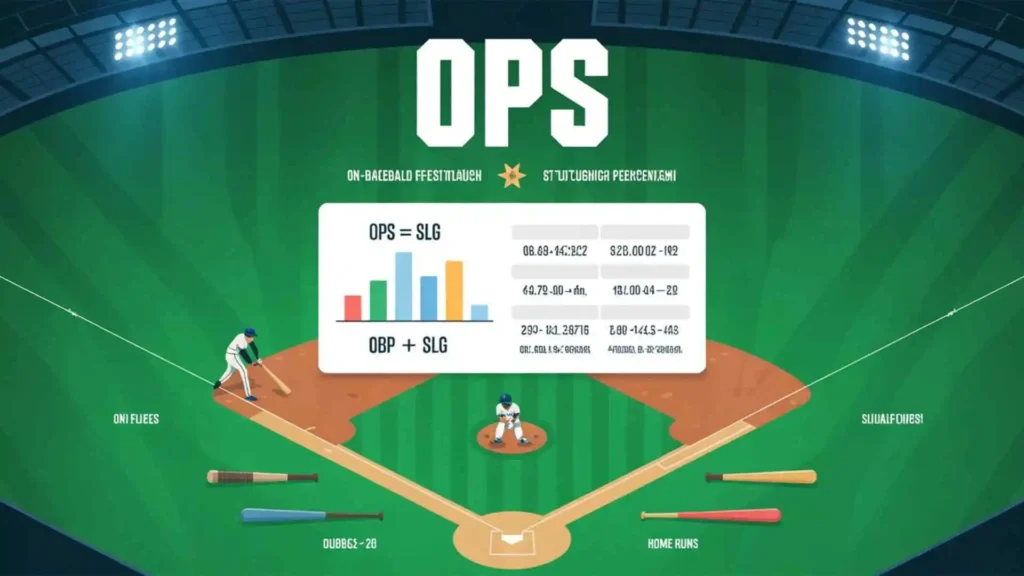
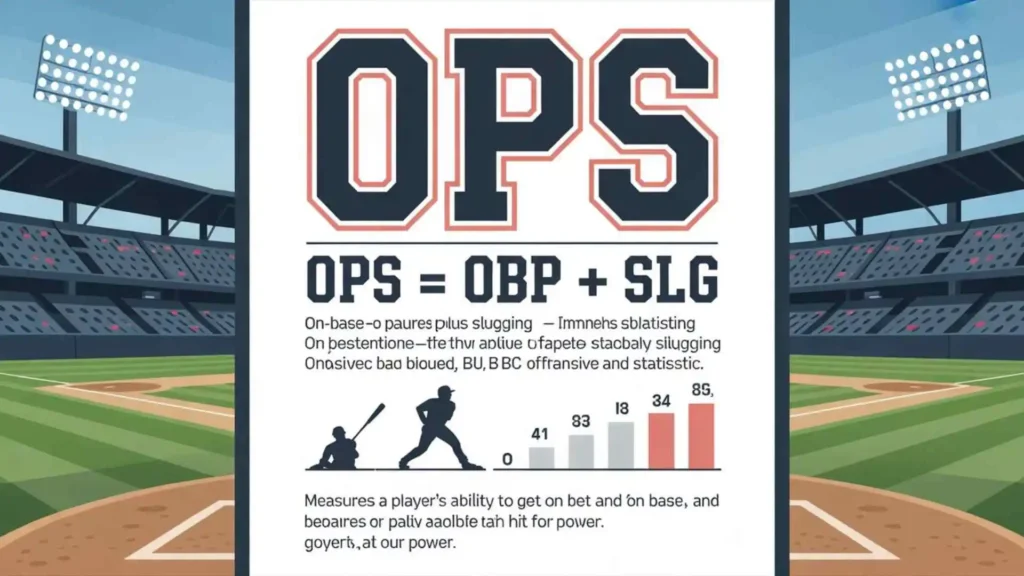
OPS in baseball means On-Base Plus Slugging.
It is a hitting statistic that combines on-base percentage (OBP) and slugging percentage (SLG) into one number.
In simple words, OPS shows how often a player reaches base and how powerful their hits are.
The formula is:
OPS = OBP + SLG
For example, if a player has:
- OBP = .350
- SLG = .500
Then the OPS is:
- .850
A higher OPS usually means a better hitter.
Meaning and Definition of OPS
Let’s break it down in the easiest way possible.
On-Base Percentage (OBP)
This tells you how often a batter gets on base.
This includes:
- hits
- walks
- hit-by-pitches
So if a player reaches base 4 times in 10 plate appearances, their OBP is .400.
Slugging Percentage (SLG)
This measures hitting power.
Not all hits are equal.
- single = 1 base
- double = 2 bases
- triple = 3 bases
- home run = 4 bases
So SLG rewards players who hit extra-base hits.
Primary Meaning
OPS = ability to get on base + ability to hit for power
That is why analysts and fans love it.
Real Example
A player with:
- OBP: .380
- SLG: .520
has:
- OPS: .900
That is considered excellent.
What is slugging percentage
Slugging percentage is a baseball statistic that measures a player’s hitting power. It shows how many total bases a player earns per at-bat and helps fans understand how strong a hitter is during games.
• Batting Power Rate
Meaning: A measure of how often a player hits for extra bases.
• Total Bases Average
Meaning: A stat that calculates total bases divided by at-bats.
• Hitting Strength Metric
Meaning: A number that reflects the power of a batter’s hits.
• Offensive Power Stat
Meaning: A baseball stat used to evaluate strong hitting ability.
• Extra Base Percentage
Meaning: A measure focused on doubles, triples, and home runs.
• SLG Statistic
Meaning: The short form used for slugging percentage in baseball records.
• Power Hitting Indicator
Meaning: A value that shows how effective a player is at power hitting.
• Base Earning Average
Meaning: A calculation of average bases earned per official at-bat.
• Long Hit Measurement
Meaning: A stat that tracks impactful and deep hits by players.
• Baseball Power Average
Meaning: A hitting average that focuses on total base production.
What does ops mean in baseball stats
OPS is a baseball statistic that combines on-base percentage and slugging percentage. It helps measure how well a player gets on base and how much hitting power the player has.
• On-base Plus Slugging
Meaning: A combined baseball stat using OBP and SLG together.
• Complete Hitting Metric
Meaning: A statistic that measures overall offensive performance.
• Offensive Performance Score
Meaning: A value used to evaluate batting success and power.
• Batter Efficiency Rating
Meaning: A number that reflects how productive a hitter is.
• Combined Batting Stat
Meaning: A baseball stat that joins two important hitting metrics.
• Baseball OPS Value
Meaning: The official measurement of on-base and slugging ability.
• Total Offensive Measure
Meaning: A stat that tracks a player’s complete offensive impact.
• Hitting Productivity Stat
Meaning: A measurement used to judge batting effectiveness.
• Offensive Ability Indicator
Meaning: A baseball number showing overall hitting quality.
• Player Attack Metric
Meaning: A stat that represents offensive contribution in games.
What does SLG mean in baseball
SLG stands for slugging percentage in baseball. It measures the number of total bases a player earns from hits and shows the strength and quality of batting performance.
• Slugging Percentage
Meaning: The full term represented by the abbreviation SLG.
• Power Hitting Stat
Meaning: A baseball metric that measures hitting strength.
• Total Base Rate
Meaning: A calculation of total bases earned per at-bat.
• Baseball SLG Metric
Meaning: A short statistical form used in baseball records.
• Batting Power Average
Meaning: A value that highlights strong and effective hitting.
• Offensive Strength Indicator
Meaning: A stat used to measure a player’s batting impact.
• Extra Base Hit Metric
Meaning: A calculation focused on powerful and long-distance hits.
• Hit Value Percentage
Meaning: A number showing the quality of offensive hits.
• Long Ball Statistic
Meaning: A baseball stat related to hard and deep hitting.
• Base Production Rate
Meaning: A measure of how many bases a hitter produces.
Highest OPS in Baseball
Highest OPS in baseball refers to players who achieve the best combined on-base percentage and slugging percentage. These players usually rank among the strongest hitters in baseball history.
• Elite Offensive Record
Meaning: A top-level achievement in combined hitting performance.
• Best OPS Performance
Meaning: The highest recorded OPS value by a player.
• Top Hitting Statistic
Meaning: An offensive record showing exceptional batting skill.
• Historic OPS Achievement
Meaning: A famous baseball milestone based on OPS numbers.
• Baseball Offensive Leader
Meaning: A player with one of the highest OPS ratings.
• Power and Contact Record
Meaning: A combined achievement in reaching base and power hitting.
• Advanced Batting Benchmark
Meaning: A high standard used to compare elite hitters.
• Legendary OPS Mark
Meaning: A notable OPS score recognized in baseball history.
• Greatest Offensive Metric
Meaning: A leading statistical value for batting excellence.
• All-time OPS Leader
Meaning: A player known for holding one of baseball’s best OPS records.
What is an average OPS in baseball
An average OPS in baseball usually falls around league-average offensive performance. It helps fans compare whether a player is below average, average, or above average at hitting.
• Standard OPS Range
Meaning: A normal OPS level seen across many baseball players.
• Average Offensive Score
Meaning: A balanced hitting value considered typical in baseball.
• League Average OPS
Meaning: The common OPS number across a baseball season.
• Normal Batting Metric
Meaning: A regular offensive statistic for player comparison.
• Balanced Hitting Value
Meaning: A moderate OPS showing average batting ability.
• Typical Offensive Rating
Meaning: A standard measure of baseball hitting performance.
• Mid-level OPS Statistic
Meaning: A baseball OPS score close to average production.
• Common Baseball OPS
Meaning: A frequently seen OPS value among players.
• General Hitting Standard
Meaning: A benchmark used to judge average hitters.
• Everyday Offensive Measure
Meaning: A normal statistical level for offensive baseball play.
How to calculate OPS in baseball
OPS in baseball is calculated by adding on-base percentage and slugging percentage together. This formula gives a quick view of a player’s overall offensive ability.
• OPS Formula
Meaning: The mathematical method used to calculate OPS.
• OBP Plus SLG Method
Meaning: A calculation created by adding OBP and SLG together.
• Offensive Stat Calculation
Meaning: A process used to measure hitting performance.
• Baseball OPS Equation
Meaning: The standard formula for finding OPS values.
• Hitting Combination Formula
Meaning: A batting equation that combines two offensive stats.
• Batting Efficiency Calculation
Meaning: A method for measuring offensive productivity.
• Player Offensive Formula
Meaning: A baseball calculation used to rate hitters.
• Combined Percentage Method
Meaning: A formula using two percentages to create OPS.
• Baseball Performance Equation
Meaning: A stat formula showing overall offensive ability.
• Offensive Production Formula
Meaning: A baseball equation used to evaluate scoring impact.
Baseball OPS leaders
Baseball OPS leaders are players who rank highest in on-base plus slugging percentage during a season or throughout baseball history. These players are often considered elite hitters.
• Top OPS Players
Meaning: Baseball players with the highest OPS rankings.
• Offensive Leaders
Meaning: Players known for strong batting performance.
• Elite Baseball Hitters
Meaning: Batters with outstanding offensive statistics.
• High OPS Rankings
Meaning: Positions earned by players with strong OPS numbers.
• Batting Performance Leaders
Meaning: Players leading offensive statistical categories.
• Power Hitting Champions
Meaning: Hitters recognized for excellent offensive output.
• Baseball Offensive Stars
Meaning: Players famous for top offensive production.
• Best Statistical Hitters
Meaning: Batters with leading combined hitting metrics.
• Record-setting OPS Players
Meaning: Athletes known for exceptional OPS achievements.
• Advanced Hitting Leaders
Meaning: Players leading modern offensive baseball statistics.
Obs in Baseball
OBS in baseball can refer to different meanings depending on the context, but many people use it when discussing offensive baseball statistics or abbreviations related to player performance.
• Baseball OBS Term
Meaning: A baseball abbreviation sometimes confused with OPS.
• Offensive Baseball Stat
Meaning: A shortened term related to batting statistics.
• Player Performance Abbreviation
Meaning: A baseball shorthand connected to offensive metrics.
• Baseball Statistics Label
Meaning: A short form used in stat discussions and records.
• Hitting Data Reference
Meaning: A term linked with player batting information.
• Baseball Metric Shortcut
Meaning: A brief statistical label used by fans and analysts.
• Offensive Tracking Term
Meaning: A phrase connected to measuring batting performance.
• Batting Statistics Name
Meaning: A common baseball term related to offensive records.
• Baseball Record Identifier
Meaning: A shortened label used in baseball stat systems.
• Sports Statistic Abbreviation
Meaning: A compact term used in baseball data analysis.
Background and Origin
OPS became popular as baseball moved deeper into analytics and sabermetrics.
Fans and analysts wanted a faster way to judge hitters than only using batting average.
Batting average only tells you how often someone gets a hit.
It does not show:
- walks
- extra-base power
- offensive value
OPS solved that problem by combining two important stats into one.
It became mainstream in the 1980s and 1990s and is now shown on most sports apps and TV broadcasts.
Usage in Different Contexts
Casual Sports Chats
“His OPS is over .900 this season, so he’s been on fire.”
Social Media
“OMG his OPS jumped after that home run streak.”
Professional Use
Commentators and analysts use OPS to compare hitters quickly.
Fantasy Sports / Betting
Many fantasy players use OPS to evaluate batters before picking teams.
Meanings Across Platforms
| Platform | Tone | Example |
| Casual | “Bro his OPS is insane” | |
| Fan reaction | “Best OPS in the league 🔥” | |
| TikTok | Trendy / sports edits | “POV: your favorite hitter has 1.000 OPS” |
| Snapchat | Quick chat | “Check his OPS tonight” |
| Discord | Sports communities | “OPS matters more than AVG here” |
Real-Life Examples and Meme Style Lines
Chat example:
Friend 1: Why is everyone hyping this player?
Friend 2: Dude, his OPS is .980.
Funny meme-style lines:
“Batting average is cute, but OPS tells the real story.”
“When your favorite player’s OPS drops below .700 and you start panicking.”
Cultural and Regional Interpretations
US / UK
In the US, OPS is a common baseball stat.
In the UK, baseball fans may know it mostly from MLB coverage.
Asia (India, Pakistan, Philippines)
Baseball is less common, so many people search the meaning online when watching MLB clips or sports reels.
Australia
Sports fans familiar with American leagues usually understand OPS through MLB and fantasy leagues.
Other Meanings of OPS
| Field | Meaning | Description |
| Baseball | On-Base Plus Slugging | Offensive batting stat |
| Gaming | Overpowered | Very strong character or weapon |
| Military / Police | Operations | Tactical missions |
| Online slang | Opps / opponents | Enemies or rivals |
This is why context matters.
Common Mistakes and Misconceptions
- Thinking OPS is the same as batting average
- Believing .500 OPS is good
- Ignoring walks
- Confusing OPS with OPS+
- Thinking it only counts home runs
Psychological and Emotional Meaning
OPS itself is neutral, but emotionally it creates excitement.
Positive
High OPS = star player, confidence, hype
Neutral
Used for stats and analysis
Negative
Low OPS may suggest poor performance
Similar Terms and Alternatives
| Word | Meaning | Tone |
| AVG | Batting average | Basic |
| OBP | On-base percentage | Analytical |
| SLG | Slugging percentage | Power-focused |
| OPS+ | Adjusted OPS | Advanced |
Is It Offensive or Friendly?
OPS in baseball is completely neutral and friendly.
It is purely a sports statistic.
Just be careful not to confuse it with slang words like “opps” in texting culture.
Grammar and Language Insight
OPS is an acronym.
It stands for On-Base Plus Slugging.
Sports language often evolves into short abbreviations because fans want quick ways to discuss performance.
That is why stats like ERA, RBI, WAR, and OPS are so common.
How to Respond When Someone Mentions OPS
Here are some natural replies:
- “Wow, that’s elite.”
- “Anything above .800 is strong.”
- “No wonder he’s batting cleanup.”
- “He’s been crushing it lately.”
- “That’s MVP-level hitting.”
Difference From Similar Words
| Term | Meaning | Difference |
| OPS | OBP + SLG | Standard hitter stat |
| OPS+ | Adjusted for league/park | More advanced |
| AVG | Hits per at-bat | Less complete |
| WAR | Total player value | Much broader |
Relevance in Dating and Online Culture
This term is generally not used in dating apps like Tinder.
However, sports fans sometimes mention stats jokingly in bios like:
“Looking for love with a .900 OPS personality.”
That kind of sports humor is common with Gen Z and meme culture.
Popularity and Trends
OPS trends strongly during:
- MLB season
- playoffs
- fantasy baseball season
- TikTok sports edits
- player comparison debates
Baseball creators often use OPS in short-form videos because it quickly proves a player’s value.
When NOT to Use OPS
Avoid using the term with people who are not discussing baseball unless you explain it.
For example:
- school presentations unrelated to sports
- formal office reports
- general chats with non-sports fans
Otherwise it may confuse readers.
FAQs
What does OPS stand for in baseball?
OPS stands for On-Base Plus Slugging, a stat that combines getting on base with hitting power.
What is a good OPS in baseball?
A good OPS is usually above .800.
Elite hitters often have .900 or higher.
Is OPS better than batting average?
Yes, many analysts prefer OPS because it includes walks and power hitting.
What does a 1.000 OPS mean?
It means the player is performing at an elite offensive level.
Is OPS used for pitchers?
Yes, sometimes analysts mention OPS against, which shows how hitters perform against a pitcher.
What does a 1.000 OPS mean?
A 1.000 OPS in baseball is considered elite and shows that a player is excellent at both getting on base and hitting for power. OPS combines on-base percentage and slugging percentage into one number. Very few players finish a season with a 1.000 OPS because it reflects superstar-level offensive performance.
What is a good OPS in baseball?
A good OPS in baseball is usually around .800 or higher. Players with an OPS above .900 are considered outstanding hitters, while anything over 1.000 is exceptional. OPS helps compare hitters by measuring both their ability to reach base and hit for extra bases during games.
Do walks count in OPS?
Yes, walks do count in OPS because they are included in on-base percentage. When a batter earns a walk, it improves the player’s ability to get on base, which increases OPS. However, walks do not affect slugging percentage since they are not counted as hits or extra-base hits.
Who had the highest OPS in baseball?
Barry Bonds holds the highest single-season OPS in modern Major League Baseball history with a remarkable 1.422 OPS during the 2004 season. His combination of power, patience, and hitting ability made that year one of the greatest offensive seasons ever recorded in baseball history.
Why is OPS important in baseball?
OPS is important because it combines two major offensive skills into one simple statistic. It measures how often a player gets on base and how much power they produce when hitting. Coaches, analysts, and fans use OPS to quickly evaluate how valuable a hitter is during a season.
Is OPS better than batting average?
Many baseball analysts consider OPS more useful than batting average because batting average only measures hits. OPS includes walks and extra-base hits, giving a fuller picture of offensive performance. A player with a lower batting average can still have a high OPS if they draw walks and hit for power.
What is the difference between OPS and OBP?
OPS and OBP are related but different baseball statistics. OBP only measures how often a player reaches base, while OPS combines OBP with slugging percentage. This means OPS values both getting on base and hitting with power, making it a broader measure of offensive ability.
Conclusion
So, what does OPS mean in baseball?
It simply means On-Base Plus Slugging, one of the best quick stats for judging a hitter.
Once you understand it, watching baseball becomes far more exciting because you can instantly spot elite players.
The next time you see a batter with a .900 OPS, you’ll know you’re watching someone special.
Discover More Topics:
- What Does YT Mean? The Real Meaning in Text, Social Media & Slang for 2026
- What Does Noel Mean? The Beautiful Meaning, Origin & Modern Use Explained in 2026

Lily Anderson
Lily Anderson is a wordsmith who finds magic in the simplest of expressions. Ever since she could hold a pen, she’s been fascinated by how similes and metaphors can transform ordinary moments into something extraordinary. Writing for her is like painting with words, each sentence carefully crafted to make readers see the world through a new lens. When she’s not buried in her notebooks, Lily enjoys wandering through city streets, observing life’s tiny wonders, and collecting inspiration from everyday experiences. She believes that the right metaphor can make the heart feel a little lighter and the mind a little brighter. Lily hopes her work sparks imagination and helps readers connect more deeply with language.
Books:
-
Metaphors in Motion
-
Similes That Speak