
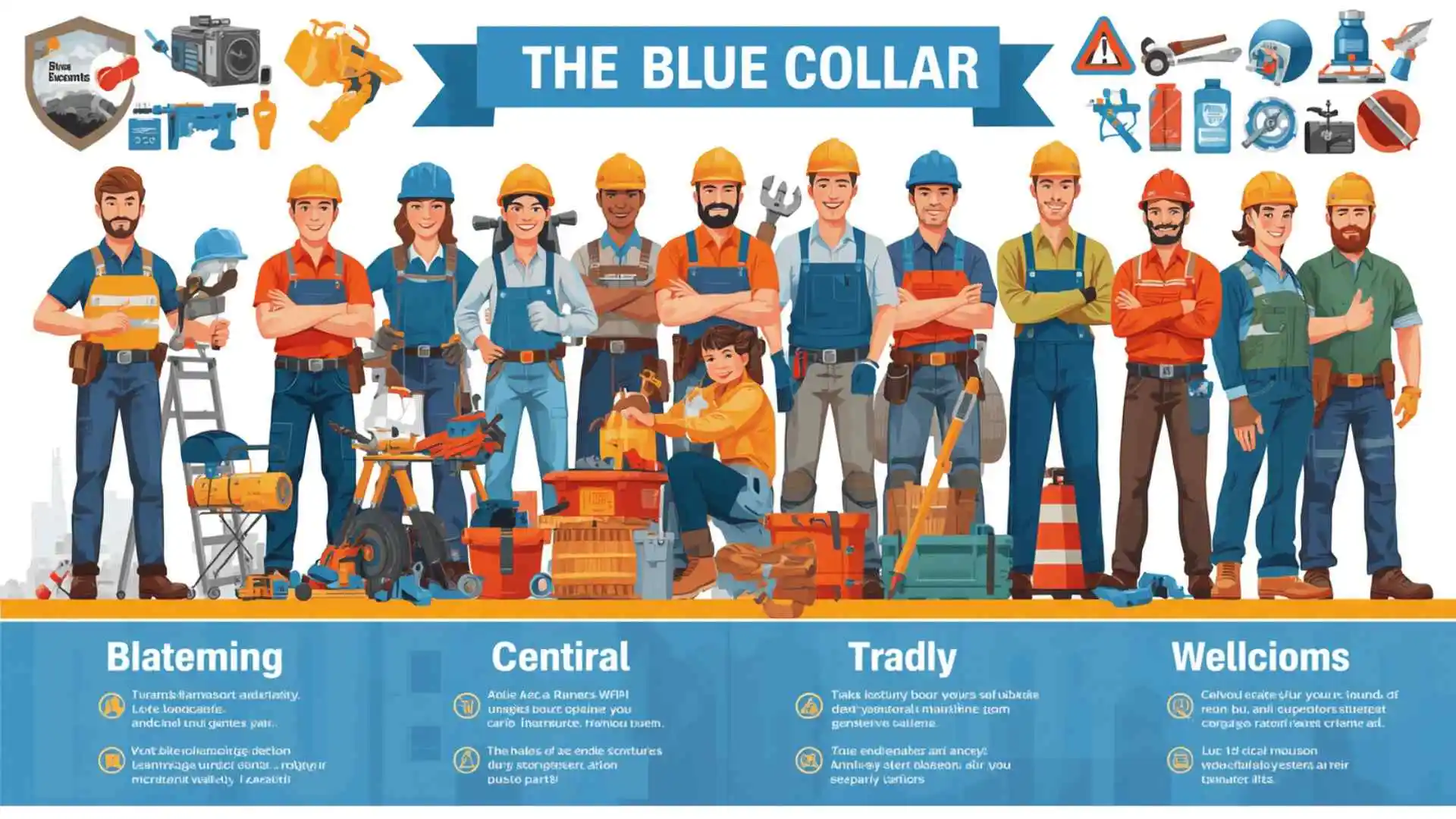
You might have heard someone say “he’s a blue collar worker” while talking about jobs, careers, or even money. But have you ever stopped and wondered what it actually means in real life?
Maybe you saw it on social media, in a job ad, or heard it in a conversation about hardworking people.
The truth is, this term is more than just a label—it represents millions of real workers who keep society running every single day.
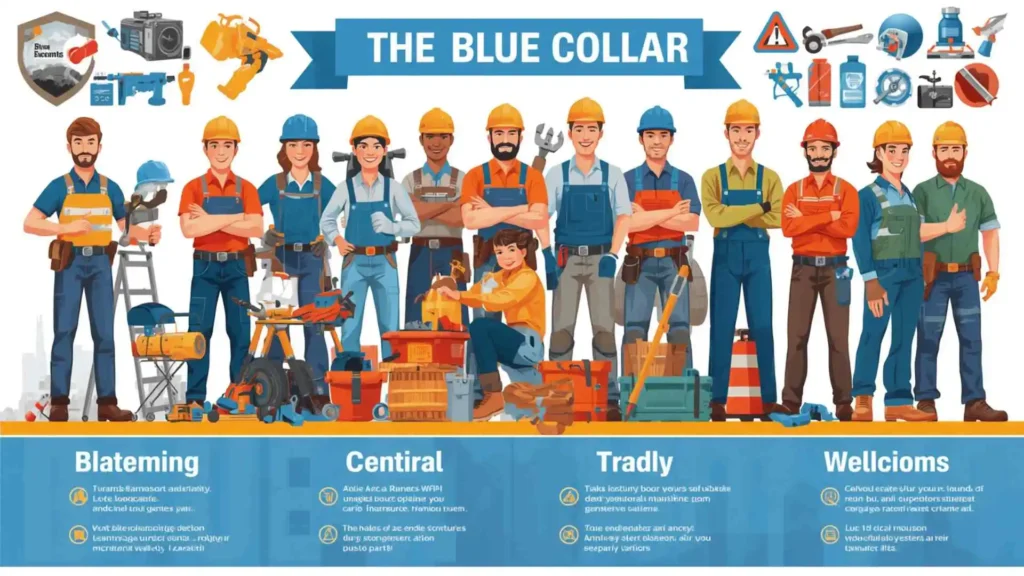
From construction sites to factories, delivery routes to repair jobs, blue collar work is everywhere.
And understanding it helps you see the value behind skills that don’t always require a college degree but require real effort and strength.
This article breaks it down in a simple, human way so you fully understand the meaning, usage, and cultural impact.
Based on modern language trends and real-world usage in online communities and job markets, this explanation is designed to be clear and practical.
What Does Blue Collar Mean?
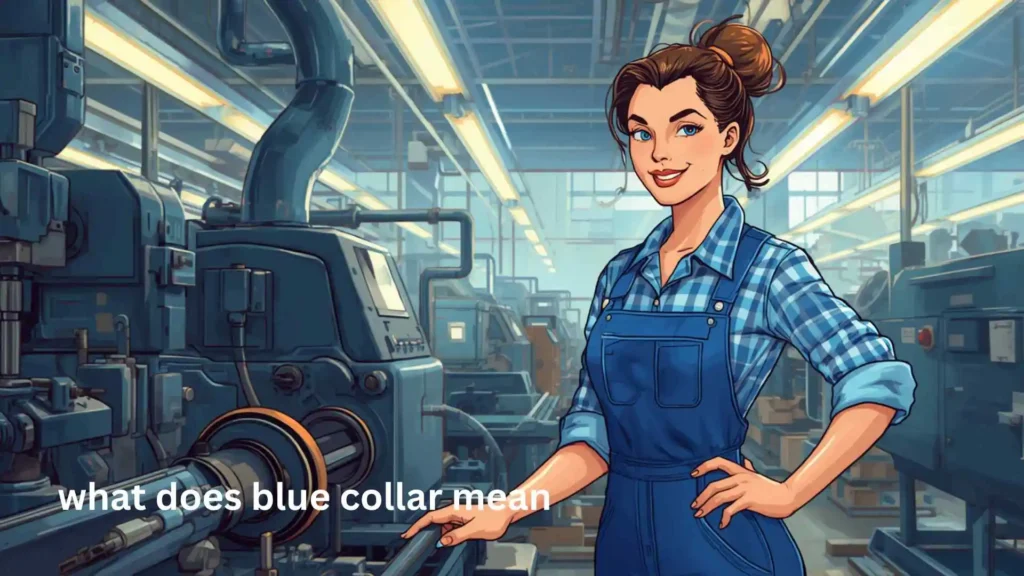
Blue collar refers to working-class jobs that usually involve manual labor, skilled trade work, or physical tasks instead of office-based or white-collar work. These jobs often include construction, manufacturing, plumbing, electrical work, driving, and maintenance roles. The term highlights hardworking people who earn wages based on hourly or physical work rather than salaried office jobs.
Meaning & Definition
The term “blue collar” originally describes workers who perform physical or skilled labor jobs. These jobs often require hands-on work instead of desk-based tasks.
Primary meaning:
People who do manual or technical labor jobs.
Secondary meaning:
Sometimes used to describe hardworking middle or working-class lifestyles.
Examples in chat:
- “My dad is a blue collar worker, he works in construction.”
- “Blue collar jobs are tough but very important for society.”
Background & Origin
The term “blue collar” became popular in the early 1900s, especially in industrial countries like the United States.
Workers in factories often wore durable blue uniforms, which helped protect clothes from dirt and oil.
Because of this, people started calling them “blue collar workers.”
Over time, the phrase expanded beyond clothing and became a way to describe an entire class of jobs.
Today, it is widely used in job markets, media, and even social media discussions.
Usage in Different Contexts
Casual Chats
People use it to describe jobs simply.
Example: “He’s a blue collar worker, he fixes machines.”
Social Media
Used in motivational posts or discussions about hard work.
Example: “Blue collar workers keep the world running.”
Professional Use
HR and job listings use it to define job categories.
Example: “We are hiring blue collar staff for warehouse operations.”
Gaming / Group Chats
Sometimes used humorously to describe grind-heavy tasks.
Example: “This game is blue collar work, too much grinding!”
Meanings Across Platforms
| Platform | Tone | Example |
| Informal | “My cousin does blue collar work in Dubai.” | |
| Motivational | “Respect blue collar workers 💪” | |
| TikTok | Trendy | “POV: blue collar life hits different” |
| Snapchat | Casual | “He’s in blue collar jobs now” |
| Discord | Gaming slang | “That grind is blue collar energy” |
Real-Life Examples & Memes
- “8 AM: office meeting. 6 AM: blue collar hustle already started.”
- “Blue collar workers don’t need gym—work is the gym.”
- “Me: tired after typing. Blue collar workers: hold my toolbox.”
Meme-style lines:
- “Blue collar life: no WiFi, just hard WiFi (work intensity).”
- “When your job gives you muscles instead of stress emails.”
Cultural or Regional Interpretations
US / UK
Blue collar often refers to skilled trades and industrial jobs. It is respected as essential labor.
Pakistan / India
It includes factory workers, drivers, electricians, construction workers, and laborers.
Often seen as hardworking but sometimes less financially stable jobs.
Philippines
Commonly associated with overseas workers and manual labor roles abroad.
Australia
Used similarly to describe trade workers like builders, miners, and technicians.
Other Meanings
| Field | Meaning | Description |
| Sociology | Working class | Social group based on manual labor jobs |
| Economy | Labor sector | Part of workforce economy |
| HR/Recruitment | Job category | Jobs requiring physical or skilled trade work |
Common Mistakes & Misconceptions
- Thinking blue collar means “low skill” (many jobs are highly skilled)
- Assuming it only means factory work
- Believing it is less important than office jobs
- Confusing it with unemployment or informal labor
- Thinking it is outdated in modern society
Psychological / Emotional Meaning
Positive:
Represents strength, discipline, and real-world skill.
Neutral:
A job category describing physical labor.
Negative:
Sometimes wrongly associated with lower social status.
Similar Terms & Alternatives
| Word | Meaning | Tone |
| Working class | Manual labor workers | Neutral |
| Tradespeople | Skilled manual workers | Positive |
| Laborer | Physical worker | Neutral |
| Skilled worker | Trained manual worker | Positive |
Is It Offensive or Friendly?
“Blue collar” is generally a respectful term.
However, tone matters.
Saying “blue collar workers are less educated” can sound offensive.
But saying “blue collar workers are essential” is respectful and positive.
Grammar or Linguistic Insight
The phrase “blue collar” is a compound adjective.
It combines “blue” (color of uniforms) and “collar” (shirt collar area).
Over time, it evolved from clothing description to a social and job classification term.
How to Respond
- “Yeah, he works a blue collar job in construction.”
- “Blue collar work is tough but important.”
- “Respect to all blue collar workers.”
- “He’s in skilled trade, a blue collar profession.”
- “That’s a hands-on blue collar role.”
Differences From Similar Words
| Term | Difference |
| Blue collar | Manual labor jobs |
| White collar | Office/professional jobs |
| Pink collar | Service/clerical jobs |
| Grey collar | Mix of technical + office roles |
Relevance in Dating & Online Culture
On apps like Tinder or Instagram bios, people sometimes mention blue collar to show authenticity and hard-working personality.
Example:
“Blue collar guy, hardworking, simple life.”
It is often seen as attractive because it represents discipline and real effort.
Popularity & Trends
On TikTok, hashtags like #bluecollar, #hardwork, and #grindlife are trending.
Gen Z often uses it to celebrate real-world hustle culture.
Memes and videos show early mornings, hard labor, and pride in physical work.
When NOT to Use Blue Collar
Avoid using it in:
- Formal academic writing without context
- Sensitive comparisons between social classes
- Job criticism or disrespectful comments
- Situations where “job ranking” may offend people
FAQs
1. What does blue collar mean in simple words?
It means jobs that involve physical or skilled manual work instead of office work. These jobs include construction, repair, and factory work.
2. Is blue collar a good job?
Yes, blue collar jobs are important and often well-paying, especially skilled trades like electricians or mechanics.
3. What is the difference between blue collar and white collar?
Blue collar involves physical work, while white collar involves office or professional desk jobs.
4. Why is it called blue collar?
Because workers used to wear durable blue shirts that didn’t show dirt easily during manual labor.
5. Is blue collar offensive?
No, it is not offensive. It is a neutral and widely used term for working-class jobs.
Conclusion
Blue collar is more than just a job label—it represents hardworking people who build, fix, and maintain the world around us.
From factories to construction sites, these workers play a powerful role in society.
Even though the work is physical, the pride, skill, and dedication behind it are unmatched.
And in today’s world, blue collar jobs are finally getting the respect they truly deserve.
Understanding this term helps us appreciate real-world effort a little more—and that’s something worth remembering.
Discover More Topics:
- What Does Six Seven Mean? Hidden Slang Meaning Explained
- What Does RS Mean in Text? The Real Meaning Behind This Viral Chat Slang
- What Does Yellow Discharge Mean | Causes, Symptoms & When to Worry
- What Does “ION” Mean in Text? The Real Gen Z Slang Explained Simply in 2026