

You might have heard someone say “gringo” in a movie, song, or even in real life while traveling. At first, it sounds a bit confusing, right? Some people think it is rude, others think it is just a normal word.
I first noticed this word in online comments and travel videos where people were talking about Americans in Latin America. The meaning wasn’t always the same, which made it even more interesting.
Understanding words like this helps you avoid misunderstandings and cultural mistakes when talking to people from different countries. This explanation is based on real language usage trends and online communication behavior.
What does gringo mean?
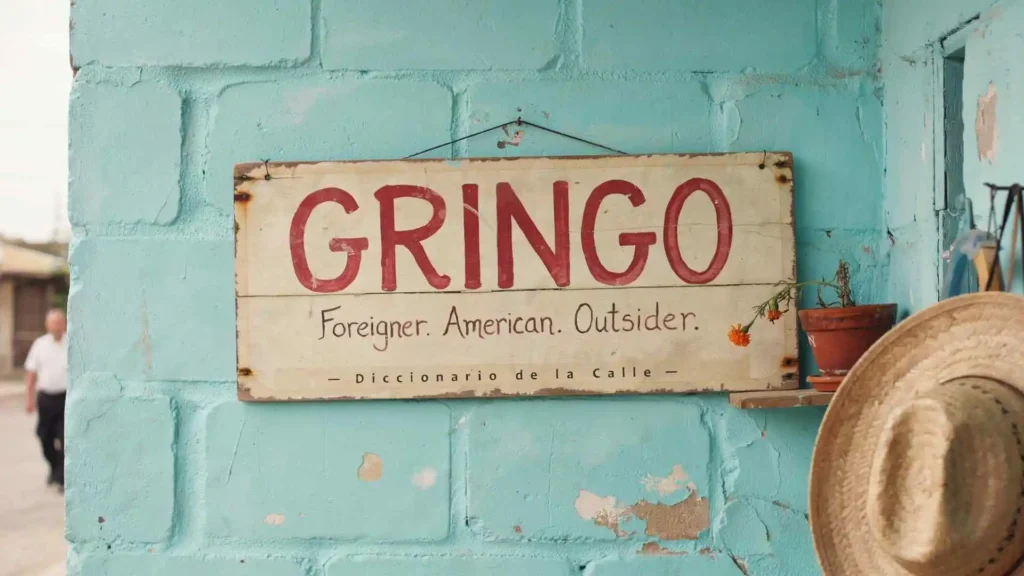
“Gringo” is a slang word mainly used in Spanish-speaking countries to refer to a foreigner, especially someone from the United States or an English-speaking country. It can be neutral, friendly, or sometimes slightly offensive depending on tone and context. In modern usage, it often simply means “outsider” or “non-local person.”
Meaning & Definition
The word gringo is commonly used in Latin America and Spain-influenced cultures.
Primary meaning:
It refers to a foreigner, especially someone who speaks English or comes from the U.S.
Secondary meanings:
It can also mean someone who looks or behaves like an outsider in a local culture.
Examples in chat:
- “Look at that gringo trying local food for the first time.”
- “He’s not from here, he’s a gringo.”
Background & Origin
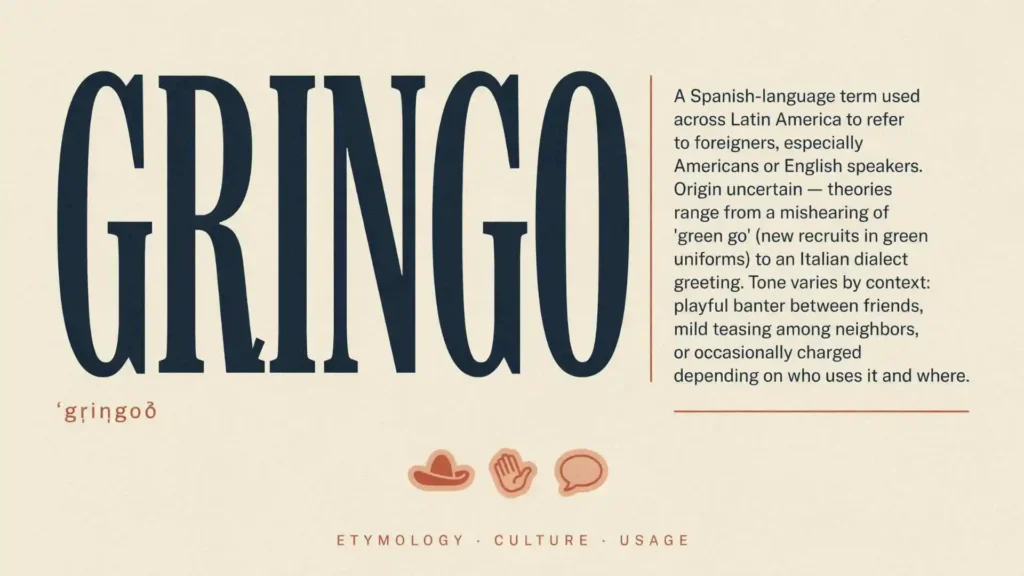
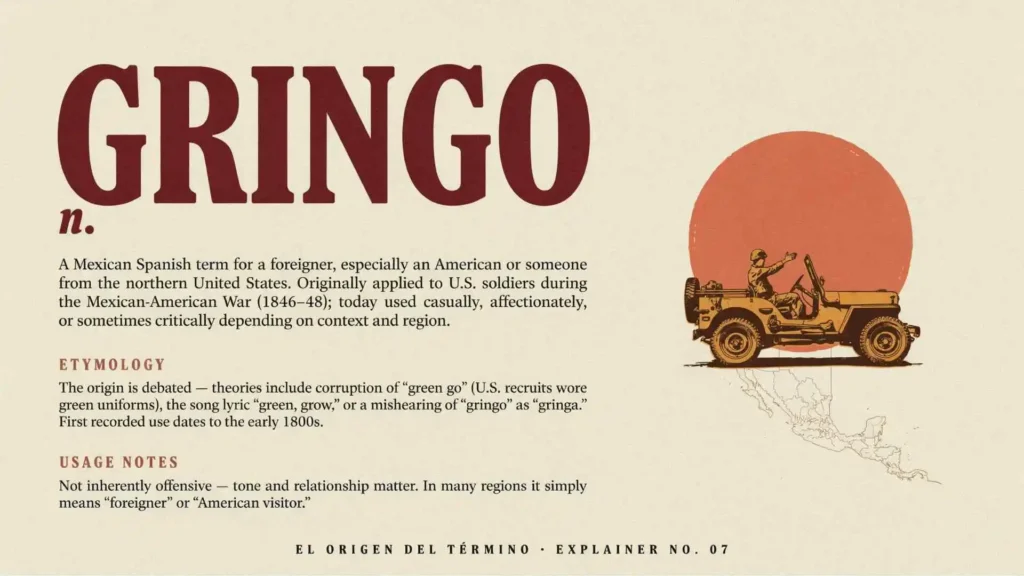
The origin of the word “gringo” is widely debated. One popular theory says it comes from the Spanish word “griego” (Greek), used in old times to describe someone who spoke an unfamiliar language.
Over time, it evolved in Latin America to describe foreigners, especially English speakers. It became widely popular during the 19th and 20th centuries due to travel, migration, and cultural exchange.
Today, it is commonly used in casual conversations, movies, and social media.
Usage in Different Contexts
Casual chats
In everyday talk, it is often used jokingly or neutrally.
Example: “That gringo ordered spicy tacos without water!”
Social media
Used in memes, travel videos, and comments.
Example: “Gringo tries street food in Mexico 🇲🇽😂”
Professional use
Rarely used in formal or business settings because it is slang.
Gaming / group chats
Sometimes used jokingly for foreign players.
Example: “We got a gringo in our squad, let’s go!”
Meanings Across Platforms (Table)
| Platform | Tone | Example |
| Casual | “That gringo is lost again 😂” | |
| Funny | “Gringo food challenge 🍕” | |
| TikTok | Trendy | “Gringo reacts to local spice 🌶️” |
| Snapchat | Light joke | “Gringo vibes today 😎” |
| Discord | Gaming slang | “We need that gringo in the team” |
Real-Life Examples & Memes
- “When the gringo says tacos are too spicy 🌶️😂”
- “Gringo trying to speak Spanish: Hola amigo… I tried my best”
- “Local: normal life / Gringo: WOW EVERYTHING IS NEW”
Memes often exaggerate cultural differences in a funny way rather than insulting anyone.
Cultural or Regional Interpretations
US / UK:
People often think it is slang for Americans and may see it as slightly rude.
Asia (India, Pakistan, Philippines):
Mostly known through TikTok or movies; many think it simply means “foreigner.”
Australia:
Less commonly used, but understood in travel or online contexts.
Other Meanings
| Field | Meaning | Description |
| Slang | Foreigner | Person from another country |
| Travel talk | Tourist | Visitor in Latin America |
| Online slang | Outsider | Someone unfamiliar with culture |
| Gaming slang | Foreign player | Non-local teammate |
Common Mistakes & Misconceptions
- Thinking it always means “American” only
- Assuming it is always an insult
- Using it in formal conversation
- Believing it has the same meaning everywhere
- Thinking locals use it aggressively all the time
Psychological / Emotional Meaning
- Positive: Friendly teasing, cultural curiosity
- Neutral: Simple label for foreigners
- Negative: Can sound rude if said with sarcasm or disrespect
Tone matters more than the word itself.
Similar Terms & Alternatives
| Word | Meaning | Tone |
| Foreigner | Non-local | Neutral |
| Tourist | Visitor | Neutral |
| Outsider | Not from group | Neutral |
| Expat | Living abroad | Neutral |
Is It Offensive or Friendly?
“Gringo” is not always offensive. In many places, it is used jokingly among friends or in casual talk. However, if said with anger or sarcasm, it can feel disrespectful.
Example friendly: “Hey gringo, welcome!”
Example rude: “Stupid gringo doesn’t understand anything.”
Grammar or Linguistic Insight
The word “gringo” is a slang noun borrowed and adapted through language evolution. It shows how cultures create shortcut words to describe outsiders in simple social communication. Over time, its meaning shifted depending on region and tone.
How to Respond
- “Haha, I’m just learning!”
- “Yes, I’m new here 😊”
- “Teaching me local culture!”
- “Guilty as charged 😄”
- “Trying my best!”
Differences From Similar Words
| Word | Meaning | Difference |
| Gringo | Foreigner (esp. English speaker) | More cultural slang |
| Tourist | Visitor | Temporary traveler |
| Expat | Living abroad | Long-term resident |
| Alien | Outsider | More formal/legal |
Relevance in Dating & Online Culture
On apps like Tinder or Instagram, “gringo” is sometimes used in bios or chats when talking about foreigners. It can create playful cultural interaction, especially in travel dating scenarios. Gen Z often uses it humorously in memes and short videos.
Popularity & Trends
The word became even more popular through TikTok travel content and meme culture. Videos like “Gringo tries local food” or “Gringo reacts to spicy dishes” have made it a global slang term among Gen Z users.
When NOT to Use gringo
Avoid using “gringo” in:
- Formal emails or business meetings
- Academic writing
- Serious political discussions
- Conversations where tone might be misunderstood
- With strangers if you’re unsure how they feel about it
FAQs
What does gringo mean in simple words?
It means a foreigner, usually someone from an English-speaking country like the U.S.
Is gringo a bad word?
Not always. It can be friendly or rude depending on how it is said.
Who uses the word gringo?
Mostly people in Spanish-speaking countries like Mexico and Latin America.
Does gringo only mean Americans?
No, it can refer to any foreigner, but often Americans specifically.
Can I call myself a gringo?
Yes, many people use it jokingly about themselves when traveling.
Conclusion
The word “gringo” is a simple but culturally powerful slang term that means “foreigner,” especially in Spanish-speaking countries. Its tone depends heavily on context, ranging from funny and friendly to slightly rude. Understanding it helps you communicate better, avoid confusion, and connect more naturally with different cultures.
Language is not just words—it’s emotion, culture, and identity all mixed together.
Discover More Topics:
- What Does Six Seven Mean? Hidden Slang Meaning Explained
- What Does RS Mean in Text? The Real Meaning Behind This Viral Chat Slang
- What Does Yellow Discharge Mean | Causes, Symptoms & When to Worry
- What Does “ION” Mean in Text? The Real Gen Z Slang Explained Simply in 2026

Alexander Vale
Hi, I’m Alexander Vale, a passionate wordsmith who loves exploring the hidden magic in language. Similes and metaphors have always fascinated me—they’re like secret bridges connecting ordinary moments to extraordinary emotions. Writing allows me to paint vivid pictures with words and invite readers into worlds both familiar and fantastical. Over the years, I’ve been captivated by how a single metaphor can spark imagination and stir the heart. My mission is to make language alive, playful, and unforgettable. When I’m not crafting sentences, you’ll find me lost in books, wandering nature, or sipping coffee while dreaming up new ideas.
Books:
-
Whispers of the Invisible
-
Metaphorically Yours