
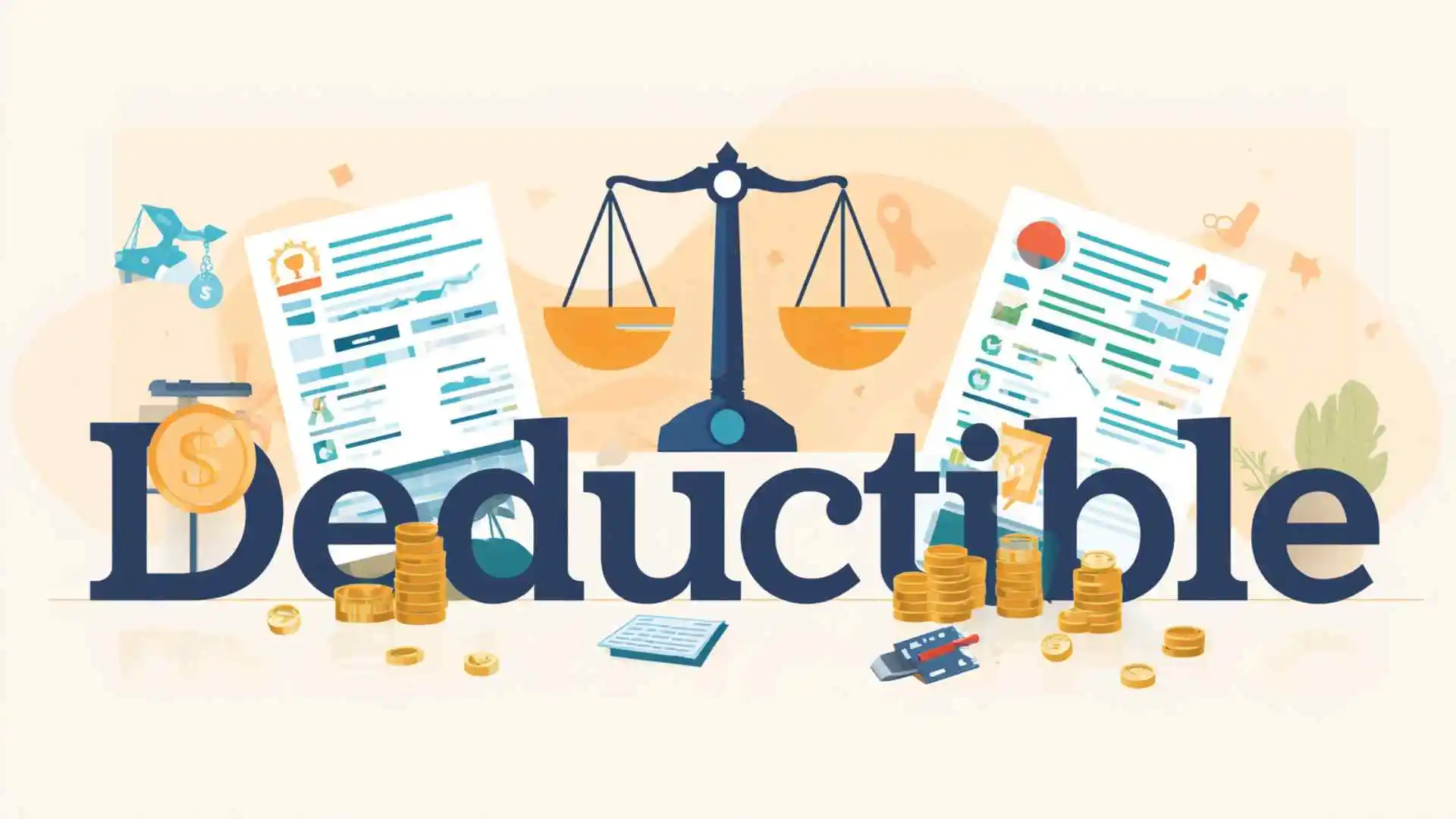
Have you ever looked at an insurance bill and seen the word “deductible” and instantly felt confused? You’re not alone. Most people see it when dealing with health insurance, car insurance, or travel insurance and just guess what it means.
Imagine you go to the hospital, get a bill, and your insurance says, “You must pay your deductible first.” That moment can feel stressful if you don’t understand it.
This topic matters because it directly affects how much money you pay from your own pocket. Knowing it can save you from surprises later.
Based on real-world insurance explanations and common user confusion trends online, this guide breaks it down in the simplest way possible.
What does deductible mean?
A deductible is the amount of money you must pay yourself before your insurance starts paying for your expenses. It applies to health, car, and other insurance types. For example, if your deductible is $500, you pay the first $500 of a claim, and then your insurance covers the rest according to your policy terms.
Meaning & Definition
The word deductible mainly refers to a fixed amount you pay before insurance coverage begins. It is a cost-sharing rule between you and the insurance company.
Primary meaning:
It is the upfront amount you pay before insurance helps.
Secondary meaning:
It can also refer to expenses that are subtracted from a total claim value.
Simple examples:
- “My car insurance has a $1,000 deductible.”
- “I can’t claim yet because I haven’t met my deductible.”
Chat example:
Friend 1: I went to the doctor and paid a lot.
Friend 2: That’s probably your deductible.
Background & Origin
The term deductible comes from the word “deduct,” which means to subtract. It became widely used in insurance systems during the 20th century when companies introduced cost-sharing models.
Insurance companies started using deductibles to reduce small claims and encourage people to handle minor costs themselves. Over time, it became a standard part of health, car, and home insurance policies worldwide.
Usage in Different Contexts
Casual chats
People use it when talking about bills or insurance confusion.
Example:
“I didn’t get coverage because my deductible wasn’t met.”
Social media
Often appears in finance tips and money-saving advice posts.
Example:
“Always check your deductible before choosing insurance!”
Professional use
Used in insurance documents, legal policies, and financial planning.
Example:
“The policy includes a $500 deductible per claim.”
Gaming / group chats
Rare, but sometimes used jokingly when talking about “paying before benefits.”
Example:
“You gotta pay the XP deductible before unlocking this level 😭”
Meanings Across Platforms (Table)
| Platform | Tone | Example |
| Informal | “Bro my insurance deductible is so high 😩” | |
| Educational | “Low premium = high deductible. Know the trade-off.” | |
| TikTok | Trendy | “POV: You didn’t understand your deductible until now” |
| Snapchat | Casual | “That hospital bill hit my deductible hard 💀” |
| Discord | Mixed | “Check your deductible before filing claim” |
Real-Life Examples & Memes
- “My deductible is so high, I basically am the insurance.”
- “Insurance said ‘we got you’… after I pay everything first 💀”
- “Deductible? More like deduct-my-entire-wallet-able.”
Meme-style lines:
- “Me: I have insurance.
Insurance: Yes, but actually no until you pay $1000.”
Cultural or Regional Interpretations
US / UK:
Very common in health and car insurance systems. People are familiar with deductibles due to private insurance.
Pakistan / India:
Less commonly used in daily life but appears in travel insurance, international health policies, and banking terms.
Philippines:
Mostly seen in employment insurance and private healthcare plans.
Australia:
Often referred to as “excess” instead of deductible, especially in car insurance.
Other Meanings (SEO Booster Section)
| Field | Meaning | Description |
| Insurance | Out-of-pocket amount | Paid before coverage starts |
| Finance | Subtracted cost | Amount removed from claim |
| Accounting | Expense adjustment | Deducted from taxable amount |
Common Mistakes & Misconceptions
- Thinking deductible is money the insurance pays (it’s actually what YOU pay)
- Assuming higher deductible means better coverage (not always true)
- Confusing deductible with premium
- Believing it resets every month in all cases
- Thinking it applies only to health insurance
Psychological / Emotional Meaning
Positive:
Gives a sense of control and structured cost-sharing.
Neutral:
Just a financial rule in insurance systems.
Negative:
Often causes stress when people realize they must pay first before help arrives.
Similar Terms & Alternatives (Table)
| Word | Meaning | Tone |
| Premium | Monthly insurance fee | Neutral |
| Copay | Fixed payment per visit | Neutral |
| Out-of-pocket | Money you pay yourself | Neutral |
| Excess | UK/Australia version | Formal |
Is It Offensive or Friendly?
The word “deductible” is completely neutral and non-offensive. It is strictly financial and used in official documents. However, in casual conversations, it can feel frustrating because it often means paying more money upfront.
Grammar or Linguistic Insight
“Deductible” comes from the verb “deduct,” meaning to subtract. The suffix “-ible” means “able to be.” So linguistically, it means “able to be deducted.” Over time, insurance companies adopted it as a technical financial term.
How to Respond
If someone mentions deductible, you can reply like:
- “What’s your deductible amount?”
- “That’s why your bill is high first.”
- “Did insurance cover anything after that?”
- “Check if you already met it.”
- “That sounds expensive, honestly.”
Differences From Similar Words (Table)
| Term | Meaning | Difference |
| Deductible | You pay before insurance starts | Upfront cost |
| Premium | Regular payment for insurance | Monthly fee |
| Copay | Small fixed payment per visit | Per service fee |
Relevance in Dating & Online Culture

On dating apps like Tinder or Bumble, financial terms like deductible sometimes appear in jokes or bios:
- “I’ve got low tolerance and a high deductible 😂”
- Used humorously to show financial awareness or stress
In Gen Z chats, it’s often used sarcastically to describe expensive life problems.
Popularity & Trends
The term “deductible” has gained attention on TikTok and YouTube finance channels. Creators explain it in simple terms because many young adults only understand it after facing real bills.
It often trends in “money mistakes” and “adulting is hard” content.
When NOT to Use deductible
Avoid using “deductible” in:
- Casual emotional conversations where finances aren’t relevant
- Romantic or personal discussions (unless talking about bills)
- Non-financial topics like hobbies or entertainment
- Formal writing where simpler terms like “cost” may be better
FAQs
1. What is a deductible in simple words?
It is the money you pay first before insurance starts covering your expenses. After that, insurance helps with remaining costs.
2. Do I always pay my deductible?
Yes, but only until you reach the set amount in your policy. After that, insurance coverage begins.
3. Is a higher deductible good or bad?
It depends. Higher deductibles usually mean lower monthly premiums but more upfront costs when you need care.
4. Does deductible apply every time?
Not always. Some policies reset yearly, while others apply per incident depending on the insurance type.
5. Is deductible the same as premium?
No. Premium is what you pay monthly, while deductible is what you pay before insurance starts helping.
Conclusion
A deductible might sound complicated, but it’s really just the amount you pay before insurance steps in. Once you understand it, reading insurance plans becomes much easier and less stressful. It’s one of those financial terms that feels confusing at first but makes sense with real-life examples.
Now that you know what it means, you’ll never look at an insurance bill the same way again.
Discover More Topics:
- What Does WTM Mean? The Real Meaning in Text, TikTok & Chats in 2026
- What Does Crash Outa Mean? The Real Meaning Behind This Viral Slang in 2026

Lily Anderson
Lily Anderson is a wordsmith who finds magic in the simplest of expressions. Ever since she could hold a pen, she’s been fascinated by how similes and metaphors can transform ordinary moments into something extraordinary. Writing for her is like painting with words, each sentence carefully crafted to make readers see the world through a new lens. When she’s not buried in her notebooks, Lily enjoys wandering through city streets, observing life’s tiny wonders, and collecting inspiration from everyday experiences. She believes that the right metaphor can make the heart feel a little lighter and the mind a little brighter. Lily hopes her work sparks imagination and helps readers connect more deeply with language.
Books:
-
Metaphors in Motion
-
Similes That Speak