
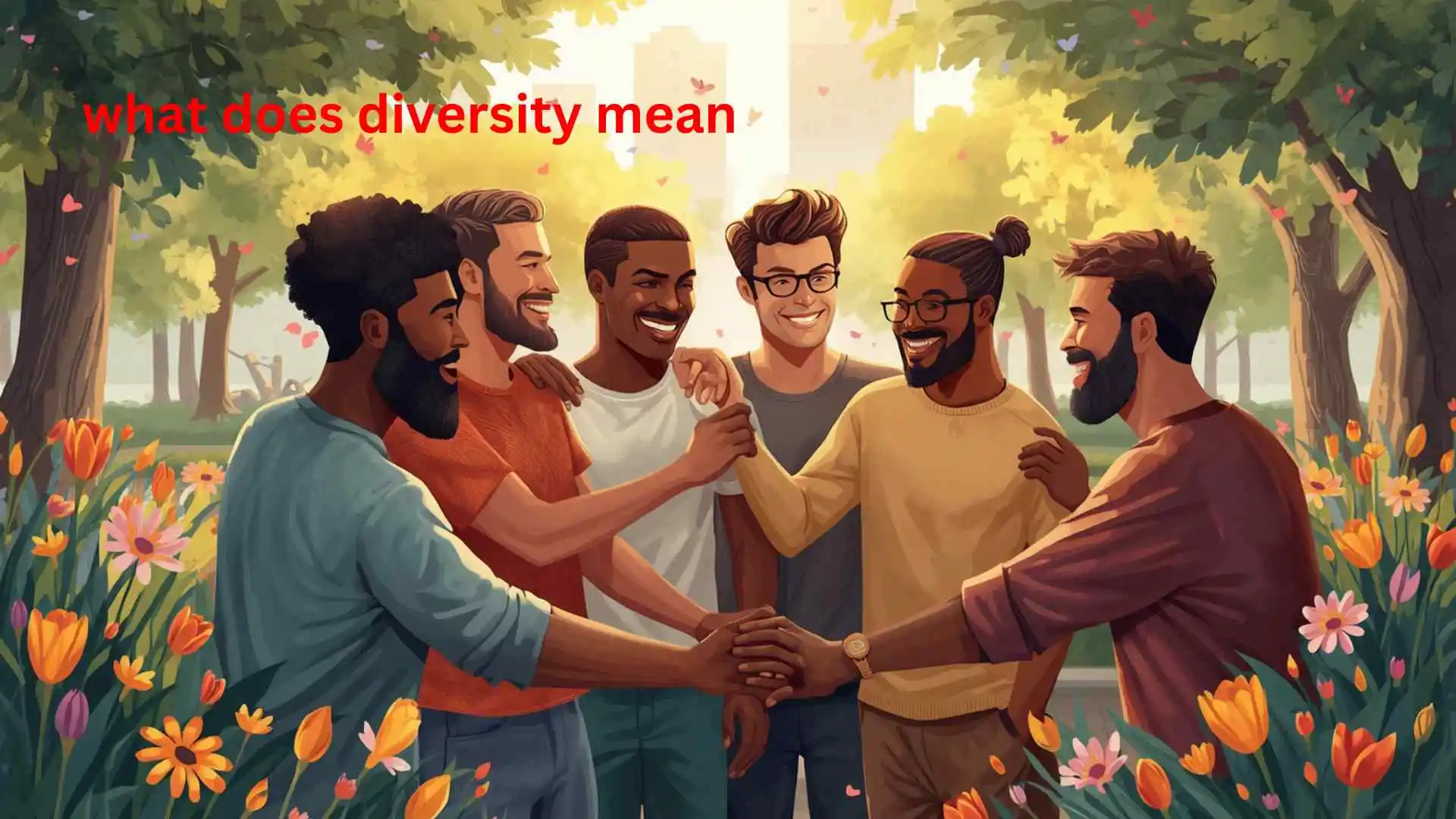
Have you ever walked into a classroom, workplace, or even a social media comment section and noticed how different everyone is? Different languages, skin colors, opinions, habits, and lifestyles all in one place. That mix can feel confusing at first, but also really powerful.
That is where the idea of “diversity” comes in. It’s something we see every day, even if we don’t always name it.
Understanding diversity helps us respect people better and live more peacefully together. This explanation is based on common real-world language use and modern online communication trends.
What Does Diversity Mean?
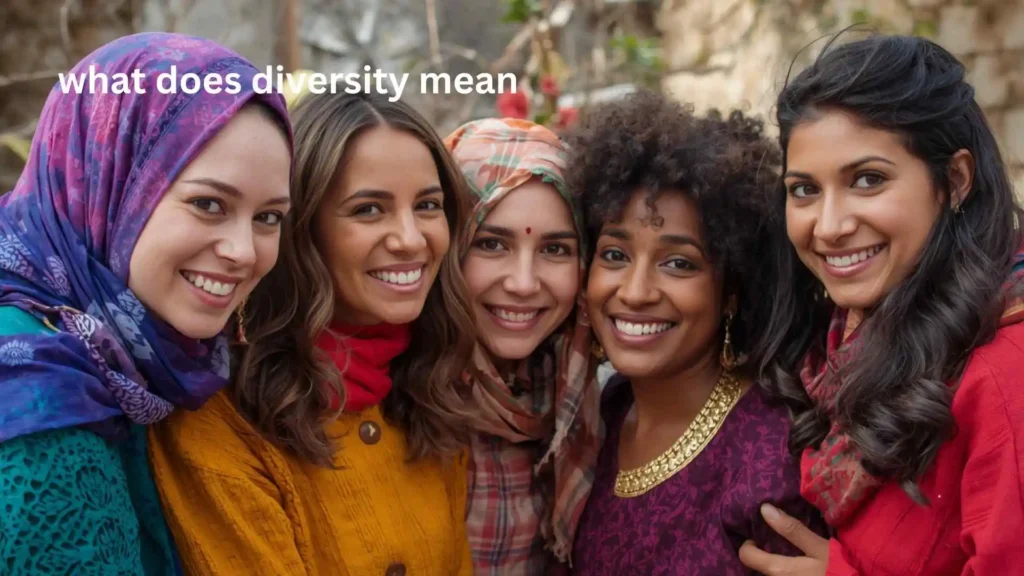
Diversity means having a mix of different people, ideas, cultures, and backgrounds in one place. It refers to how individuals are not all the same and how those differences add value to society. Diversity can include race, language, religion, gender, age, opinions, and experiences. It is about variety and inclusion rather than sameness.
Meaning & Definition
Diversity is a word used to describe differences between people or things in a group or environment. The primary meaning is the presence of variety among individuals. A secondary meaning is acceptance and inclusion of those differences in a positive way.
Example:
- “Our school has a lot of diversity because students come from many countries.”
- “Diversity in opinions makes discussions more interesting.”
Background & Origin
The word “diversity” comes from the Latin word diversitas, which means variety or difference.
It became widely popular in modern English during discussions about society, equality, and workplaces.
Today, people use it more often because the world is more connected through travel, education, and social media.
Usage in Different Contexts
Casual Chats
People use it when talking about friends or groups.
Example: “I love the diversity in our friend group, everyone is unique.”
Social Media
Used in captions, hashtags, and discussions.
Example: “Celebrating cultural diversity ❤️ #UnityInDiversity”
Professional Use
In workplaces and education systems.
Example: “The company promotes diversity in hiring.”
Gaming / Group Chats
Used when players come from different countries.
Example: “Our squad has so much diversity, we speak 5 languages!”
Meanings Across Platforms
| Platform | Tone | Example |
| Casual | “Our group has great diversity 😂” | |
| Positive | “Love cultural diversity ❤️” | |
| TikTok | Trendy | “POV: diversity in school be like…” |
| Snapchat | Fun | “So much diversity in one snap!” |
| Discord | Informal | “Nice diversity in this server” |
Real-Life Examples & Memes
Sometimes people joke about diversity in funny ways.
Chat-style examples:
- “Bro, our group project is basically United Nations 💀”
- “Diversity level: we argue in 3 languages at once 😂”
Meme-style lines:
- “When the group chat has 10 countries and still can’t decide pizza toppings.”
- “Diversity: same goal, different chaos.”
Cultural or Regional Interpretations
US / UK:
Seen as a positive value in schools, workplaces, and society. It often connects to equality and inclusion.
Asia (India, Pakistan, Philippines):
Strong cultural diversity due to languages, traditions, and religions living together.
Australia:
Known for multicultural society where diversity is part of national identity.
Other Meanings
| Field | Meaning | Description |
| Sociology | Cultural mix | Differences in human societies |
| Biology | Species variety | Different living organisms in an ecosystem |
| Business | Workforce mix | Hiring people from different backgrounds |
Common Mistakes & Misconceptions
- Thinking diversity only means race or nationality
- Assuming diversity always removes conflict
- Believing diversity is only for big companies
- Confusing diversity with inequality
- Thinking it means everyone must agree
Psychological / Emotional Meaning
Diversity can create different emotional effects:
Positive: It brings learning, creativity, and understanding.
Neutral: It simply shows differences without judgment.
Negative: If misunderstood, it can sometimes cause conflict or misunderstanding.
Similar Terms & Alternatives
| Word | Meaning | Tone |
| Variety | Different types | Neutral |
| Inclusion | Welcoming all | Positive |
| Multicultural | Many cultures | Positive |
| Range | Spread of types | Neutral |
Is It Offensive or Friendly?
Diversity is generally a friendly and positive word. It is not offensive. However, tone matters.
Example:
- Friendly: “We love diversity in our team.”
- Negative tone: “Too much diversity causes problems” (can sound rude or biased depending on context)
Grammar or Linguistic Insight
“Diversity” is a noun. It describes a state or condition of being different.
Over time, it has evolved from a simple word meaning “variety” to a powerful social and cultural concept used in education, politics, and workplaces.
How to Respond
- “That’s what makes it interesting!”
- “True, diversity makes life better.”
- “I like how different everyone is.”
- “That’s actually a good mix of people.”
- “We learn a lot from diversity.”
Differences From Similar Words
| Word | Difference |
| Diversity | Focus on differences |
| Equality | Focus on fairness |
| Inclusion | Focus on acceptance |
| Variety | General mix, not social |
Relevance in Dating & Online Culture
In dating apps like Tinder or Bumble, people often mention diversity when talking about openness to different cultures or backgrounds.
Gen Z culture also celebrates diversity through memes, global friendships, and online communities where people from different countries interact daily.
Popularity & Trends
Diversity has become a trending topic on TikTok, Instagram, and YouTube.
It is often used in motivational content, school videos, workplace culture posts, and memes about multicultural friendships.
Gen Z especially uses it to show pride in mixed backgrounds and global connections.
When NOT to Use diversity
Avoid using “diversity” in situations like:
- Formal legal documents where precise terms are needed
- When referring to unrelated technical instructions
- In sensitive arguments where it may sound judgmental
- When describing things that require exact scientific terms instead
FAQs
1. What does diversity mean in simple words?
Diversity means having different types of people, ideas, or things together. It shows variety and uniqueness in a group or place.
2. Why is diversity important?
It helps people learn from each other, understand different cultures, and create a more open and creative environment.
3. Is diversity only about culture?
No, it also includes language, opinions, gender, age, and even ideas and experiences.
4. Can diversity cause problems?
Sometimes misunderstandings can happen, but it usually leads to learning and growth when handled properly.
5. Where do we see diversity in daily life?
In schools, workplaces, social media, friendships, and even online games.
Conclusion
Diversity is not just a word—it is something we live every day without even noticing. It reminds us that differences are not weaknesses but strengths that make life more colorful and meaningful.
When we understand diversity, we understand people better—and that’s what truly makes the world feel connected.
Discover More Topics:
- What Does MHM Mean in Text | Real Meaning, Usage & Hidden Tone in 2026
- What Does a Medusa Tattoo Mean | Hidden Symbolism & Powerful Truths in 2026
Lily Anderson
Lily Anderson is a wordsmith who finds magic in the simplest of expressions. Ever since she could hold a pen, she’s been fascinated by how similes and metaphors can transform ordinary moments into something extraordinary. Writing for her is like painting with words, each sentence carefully crafted to make readers see the world through a new lens. When she’s not buried in her notebooks, Lily enjoys wandering through city streets, observing life’s tiny wonders, and collecting inspiration from everyday experiences. She believes that the right metaphor can make the heart feel a little lighter and the mind a little brighter. Lily hopes her work sparks imagination and helps readers connect more deeply with language.
Books:
-
Metaphors in Motion
-
Similes That Speak