
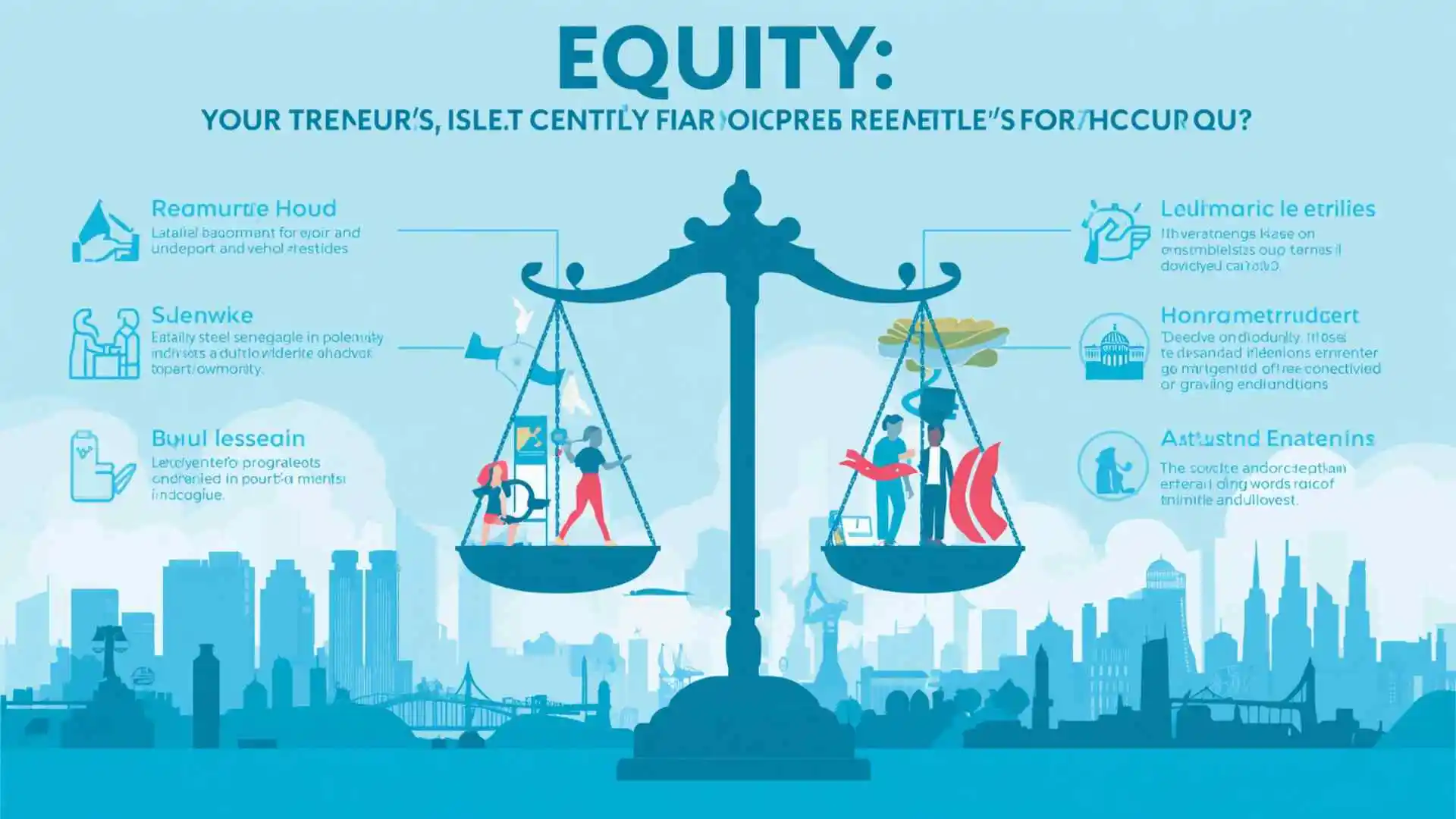
Have you ever been in a situation where two people worked just as hard, but one got more reward than the other? It feels unfair, right? That’s the kind of confusion many people face when they hear the word “equity.”
In real life, we hear this term in jobs, schools, companies, and even social media discussions. But most people mix it up with “equality,” and that’s where things get tricky.
Understanding equity helps you see fairness in a deeper way—not just treating everyone the same, but giving people what they actually need to succeed. This topic matters because it shapes decisions in education, business, and even society.
Based on modern communication trends and real-world usage, equity is one of the most misunderstood yet important ideas today.
What Does Equity Mean? (Direct Answer)
Equity means fairness based on individual needs, where people are given different levels of support to achieve equal outcomes. Unlike equality, which treats everyone the same, equity focuses on giving each person what they need to succeed fairly. It is commonly used in education, business, finance, and social discussions.
Meaning & Definition
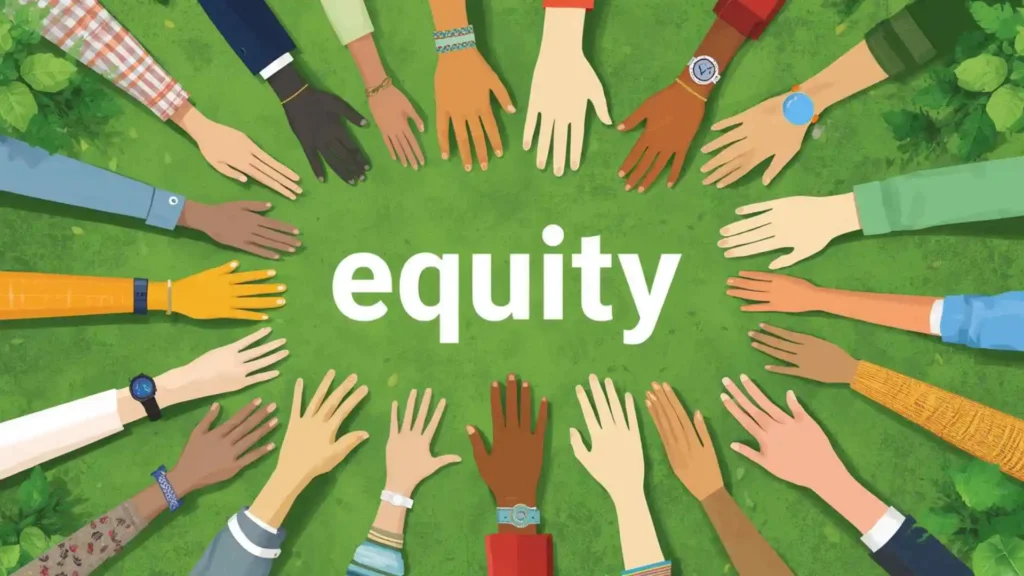
The word “equity” has a few connected meanings depending on the context.
Primary meaning: fairness and justice based on individual circumstances.
Secondary meanings:
- In business: ownership value in a company
- In finance: the value of shares or assets after debts are removed
Simple examples:
- “The school supports equity by helping struggling students more.”
- “He has equity in the company, meaning he owns part of it.”
Chat examples:
- Friend 1: “Why did she get extra help?”
- Friend 2: “That’s equity—they’re supporting her needs.”
Background & Origin
The concept of equity comes from old legal and philosophical ideas about fairness.
It became widely used in education and social systems in the 20th century, especially when discussing fairness in opportunities.
Today, it is popular in business, politics, and online discussions because people are more aware of fairness issues in society.
Usage in Different Contexts
Casual Chats
People use it when talking about fairness in daily life.
- “That’s not equal, but it’s equity.”
Social Media
Often used in debates about fairness and justice.
- “Equity > equality in real life.”
Professional Use
Used in workplaces and HR policies.
- “Our company promotes equity in hiring.”
Gaming / Group Chats
Sometimes used jokingly.
- “Give him more resources—that’s equity 😂”
Meanings Across Platforms
| Platform | Tone | Example |
| Casual | “That’s equity bro, chill.” | |
| Opinionated | “Equality is nice, but equity is real justice.” | |
| TikTok | Trendy | “POV: equity explained in 10 seconds” |
| Snapchat | Informal | “We need equity in teams lol” |
| Discord | Gaming | “Admins should apply equity for balance” |
Real-Life Examples & Memes
- Teacher giving extra time to a slow learner = equity
- Boss giving training to new employees = equity
- Government support programs = equity
Funny chat lines:
- “Equality is giving everyone shoes. Equity is giving the right size 😂”
- “Bro got equity support in exams, not cheating 😭”
Cultural or Regional Interpretations
US / UK
Mostly used in education, politics, and workplace fairness.
Asia (India, Pakistan, Philippines)
Often understood as “fair help based on need,” especially in schools and government aid systems.
Australia
Common in social policy discussions and workplace fairness programs.
Other Meanings
| Field | Meaning | Description |
| Finance | Ownership value | Share value after debts |
| Business | Stake ownership | Company ownership percentage |
| Law | Fair justice | Legal fairness system |
| Education | Support fairness | Helping students based on need |
Common Mistakes & Misconceptions
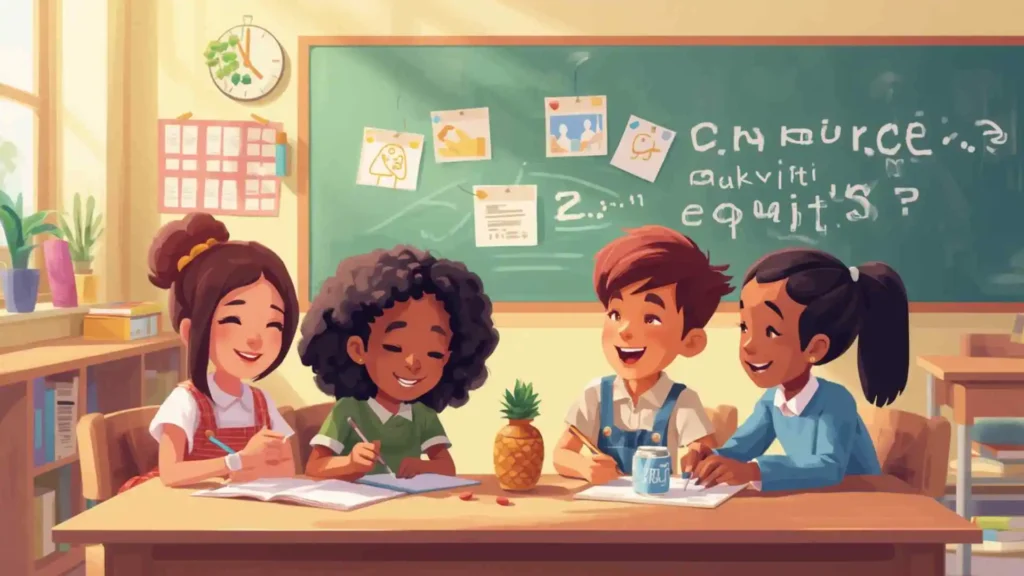
- Thinking equity and equality are the same
- Assuming equity means favoritism
- Believing it only applies to money
- Confusing it with charity
- Using it without understanding context
Psychological / Emotional Meaning
Positive:
Feels fair, supportive, and balanced for people with different needs.
Neutral:
Used as a logical system for distribution.
Negative:
Sometimes seen as unfair by those who receive less support.
Similar Terms & Alternatives
| Word | Meaning | Tone |
| Equality | Same treatment | Neutral |
| Justice | Moral fairness | Strong |
| Fairness | Balanced treatment | Positive |
| Inclusion | Everyone involved | Positive |
Is It Offensive or Friendly?
The word “equity” is not offensive.
However, it can become sensitive in debates about politics, education, or resources.
Example:
- Friendly: “We support equity in learning.”
- Sensitive: “That system is unfair, we need equity!”
Grammar or Linguistic Insight
“Equity” comes from the Latin word aequitas, meaning fairness or justice.
Over time, English expanded its meaning into finance, law, and social systems, making it a multi-purpose term used in both technical and everyday language.
How to Respond
- “That makes sense now.”
- “Oh, so it’s about fairness, not sameness.”
- “I didn’t know equity had different meanings.”
- “That actually explains a lot.”
- “Now I get the difference between equity and equality.”
Differences From Similar Words
| Word | Difference |
| Equity | Fair based on need |
| Equality | Same for everyone |
| Justice | Moral/legal fairness |
| Fairness | General balanced treatment |
Relevance in Dating & Online Culture
In online culture, especially Gen Z spaces, “equity” is sometimes used jokingly:
- “Give her more attention—that’s equity 😭”
- Dating apps like Tinder sometimes spark debates about “fair chances” in matching systems
It’s more of a meme concept than a serious dating rule.
Popularity & Trends
The word “equity” is trending on platforms like TikTok, especially in educational and social justice content.
It’s often used in:
- Short explainer videos
- Meme comparisons (equity vs equality)
- Debate clips
Gen Z uses it to explain fairness in a more emotional and relatable way.
When NOT to Use Equity
- In casual jokes where clarity matters more
- In simple conversations where “fairness” is enough
- In strict legal documents without definition
- In situations where equality is actually meant
FAQs
1. What does equity mean in simple words?
It means fairness based on what each person needs to succeed, not treating everyone exactly the same.
2. Is equity the same as equality?
No, equality means same treatment, while equity means fair treatment based on need.
3. Where is equity used?
It is used in education, business, law, and social discussions.
4. What is equity in finance?
It means ownership value in a company or asset after debts are removed.
5. Why is equity important?
Because it ensures fairness and helps people with different needs get equal opportunities.
Conclusion
Equity is more than just a word—it’s a way of thinking about fairness in real life. Instead of treating everyone the same, it focuses on giving people what they actually need to succeed.
When you understand equity, you start seeing the world more clearly and fairly. And honestly, that shift in thinking can change how you view everything from school to society.
Discover More Topics:
- What Does Six Seven Mean? Hidden Slang Meaning Explained
- What Does RS Mean in Text? The Real Meaning Behind This Viral Chat Slang
- What Does Yellow Discharge Mean | Causes, Symptoms & When to Worry
- What Does “ION” Mean in Text? The Real Gen Z Slang Explained Simply in 2026

Lily Anderson
Lily Anderson is a wordsmith who finds magic in the simplest of expressions. Ever since she could hold a pen, she’s been fascinated by how similes and metaphors can transform ordinary moments into something extraordinary. Writing for her is like painting with words, each sentence carefully crafted to make readers see the world through a new lens. When she’s not buried in her notebooks, Lily enjoys wandering through city streets, observing life’s tiny wonders, and collecting inspiration from everyday experiences. She believes that the right metaphor can make the heart feel a little lighter and the mind a little brighter. Lily hopes her work sparks imagination and helps readers connect more deeply with language.
Books:
-
Metaphors in Motion
-
Similes That Speak