
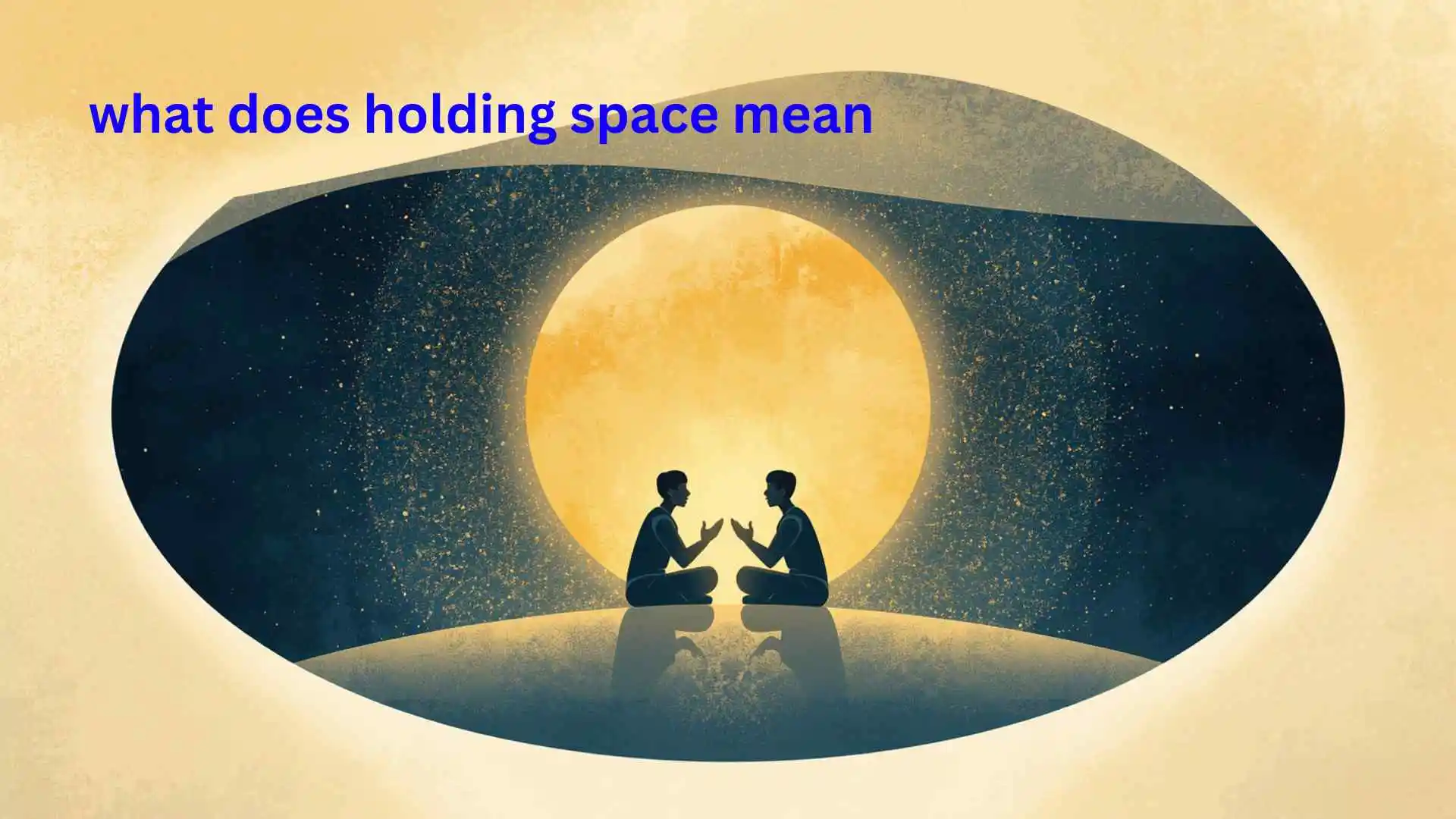
Have you ever been talking to someone who is going through a hard time, and they just sit with you quietly without trying to fix anything? They don’t interrupt, they don’t judge, they just… stay present.
That feeling often gets described as “holding space,” even if most people don’t fully understand what it really means. In today’s fast-moving world, we’re used to giving advice, solving problems, and jumping in quickly. But emotional moments don’t always need solutions. Sometimes, they just need presence.
The phrase “holding space” has become popular on social media, therapy discussions, and even casual conversations, but its deeper meaning is often misunderstood.
Based on modern language trends and real online usage patterns, this guide breaks it down in a simple, human way.
What Does Holding Space Mean?
Holding space means being emotionally present for someone without judgment, interruption, or trying to fix their problems. It is about offering calm support where a person feels safe to express emotions freely. You simply listen, understand, and stay with them in the moment without pushing advice or solutions unless asked.
Meaning & Definition
At its core, holding space means creating a safe emotional environment for someone.
Primary meaning:
It is the act of being fully present for another person’s feelings without trying to control or change them.
Secondary meanings:
It can also mean emotional support in silence, or respecting someone’s process of healing or thinking.
Example 1:
Friend A: “I don’t know what to do with my life.”
Friend B: “I’m here with you. Take your time.”
Example 2:
Sometimes just sitting quietly with someone after bad news is also holding space.
Background & Origin
The phrase “holding space” is believed to have roots in therapy, counseling, and mindfulness practices.
It became more widely used in the early 2000s, especially in coaching and self-help communities.
Later, it spread to social media platforms like Instagram and TikTok, where emotional awareness content became popular.
People use it because modern life often feels rushed, and this phrase gives language to a kind of calm emotional support that many people need but struggle to describe.
Usage in Different Contexts
Casual Chats
In everyday conversation, it means being emotionally available.
Example:
“I didn’t give advice, I just held space for her.”
Social Media
Used in captions or posts about emotional healing.
Example:
“Sometimes the best thing you can do is hold space for someone’s pain.”
Professional Use
Common in therapy, coaching, and counseling.
Example:
“A therapist holds space for clients to explore emotions safely.”
Gaming / Group Chats
Rare but used humorously in supportive friend groups.
Example:
“Bro is rage quitting, just holding space for him right now.”
Meanings Across Platforms
| Platform | Tone | Example |
| Emotional | “I’m here, just holding space for you.” | |
| Reflective | “Holding space for healing energy.” | |
| TikTok | Trendy | “POV: you’re holding space for someone crying.” |
| Snapchat | Casual | “No advice, just holding space rn.” |
| Discord | Supportive | “We’re just holding space for the team after that loss.” |
Real-Life Examples & Memes
Sometimes holding space looks like sitting quietly with a friend after a breakup while they eat ice cream in silence.
Or listening to someone vent for 30 minutes without saying “just move on.”
Meme-style lines:
- “Me: tries to fix everything. Also me: learns to hold space instead.”
- “Holding space like a professional therapist… in my head.”
Cultural or Regional Interpretations
In the US and UK, holding space is often linked with therapy culture and emotional intelligence.
In countries like India and Pakistan, it is becoming popular among younger people through social media, especially in friendship and relationship conversations.
In places like the Philippines, it is often tied to strong emotional support within close-knit friendships and family bonds.
In Australia, it is mostly used in wellness and mindfulness communities.
Other Meanings
| Field | Meaning | Description |
| Psychology | Emotional presence | Supporting without judgment |
| Therapy | Safe environment | Allowing expression freely |
| Coaching | Client support | Non-directive listening |
| Communication | Active presence | Listening without interruption |
Common Mistakes & Misconceptions
- Thinking it means giving advice or solutions
- Assuming it requires saying a lot of words
- Believing it is only for therapists
- Confusing it with emotional distance
- Using it without understanding emotional context
Psychological / Emotional Meaning
Positive:
Holding space creates emotional safety and trust. It helps people feel heard and understood.
Neutral:
It can simply mean staying quiet and present without emotional engagement.
Negative:
If misunderstood, it may feel like emotional distance or lack of support.
Similar Terms & Alternatives
| Word | Meaning | Tone |
| Being present | Fully attentive support | Neutral |
| Active listening | Focused listening with care | Positive |
| Emotional support | Helping someone emotionally | Positive |
| Being there | Simple presence | Friendly |
Is It Offensive or Friendly?
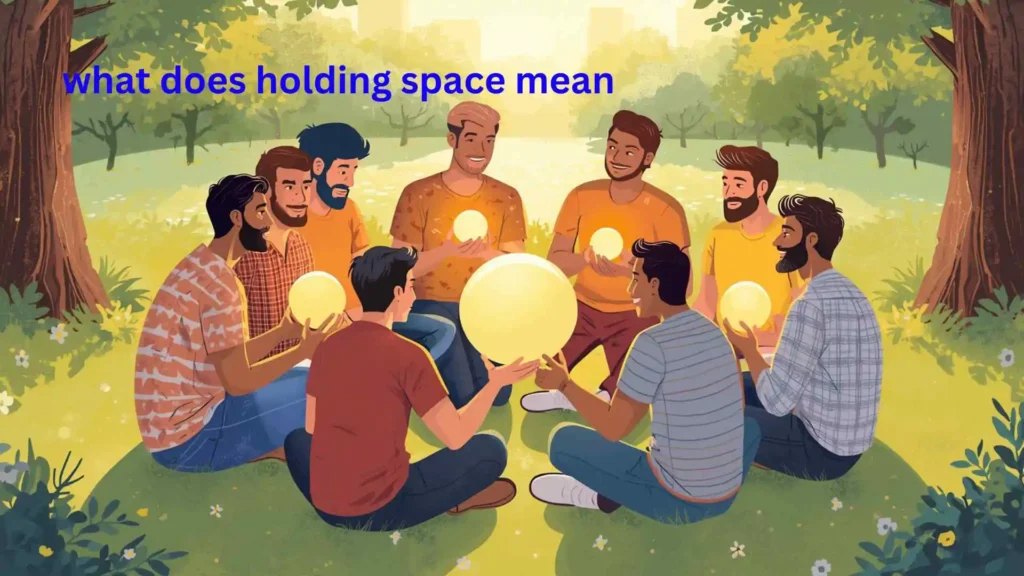
Holding space is generally very friendly and supportive. It is never offensive when used correctly.
However, if someone expects advice and you only “hold space,” they might feel confused or unsupported.
Example:
Friendly: “I’m here holding space for you.”
Misunderstood: “Stop talking, I’m just holding space.”
Grammar or Linguistic Insight
“Hold space” is a metaphorical phrase.
It does not mean physically holding anything. Instead, “space” refers to emotional or mental room for someone’s feelings.
Language like this shows how English often uses physical words to explain emotional experiences.
How to Respond
- “I’m here for you.”
- “Take your time, I’m listening.”
- “You don’t have to go through this alone.”
- “I’m holding space for whatever you’re feeling.”
- “I hear you, no pressure.”
Differences From Similar Words
| Term | Difference |
| Helping | Actively solving problems |
| Fixing | Giving solutions |
| Holding space | Just being present |
| Comforting | Offering emotional relief |
Relevance in Dating & Online Culture
On dating apps like Tinder, people sometimes say they want a partner who can “hold space,” meaning someone emotionally mature.
In Gen Z chats, it is often used sarcastically or humorously:
“I’m not ghosting, I’m holding space.”
It reflects a shift toward emotional awareness in modern relationships.
Popularity & Trends
The phrase has become popular on TikTok and Instagram, especially in mental health and self-care content.
Gen Z users often use it in captions, memes, or therapy-style jokes.
It is part of a larger trend of emotional vocabulary becoming mainstream online.
When NOT to Use holding space mean
Avoid using “holding space” in formal or action-required situations.
- Workplace performance reviews
- Emergency situations where action is needed
- Situations requiring clear advice or instructions
- Professional business communication where clarity matters
It works best in emotional, personal, or supportive conversations.
FAQs
What does holding space mean in simple words?
It means being there for someone emotionally without judging or trying to fix their problems. You simply listen and support them calmly.
Is holding space the same as giving advice?
No, it is the opposite. Holding space means not giving advice unless asked and instead allowing the person to express freely.
Where is holding space used most?
It is commonly used in therapy, friendships, social media captions, and emotional support conversations online.
Is holding space a professional term?
Yes, it is often used in counseling, coaching, and psychology to describe emotional presence and support techniques.
Why is holding space important?
Because it helps people feel safe, understood, and emotionally supported without pressure or judgment.
Conclusion
Holding space is a simple phrase, but it carries deep emotional meaning. It is about presence, patience, and allowing someone to feel what they feel without interruption.
In a world full of quick advice and fast replies, sometimes the most powerful thing you can do is just stay with someone in silence. That quiet support often means more than words ever could.
And maybe that’s the real beauty of holding space—it reminds us that being there is sometimes enough.
Discover More Topics:
- What Does WTM Mean? The Real Meaning in Text, TikTok & Chats in 2026
- What Does Crash Out Mean? The Real Meaning Behind This Viral Slang in 2026

Lily Anderson
Lily Anderson is a wordsmith who finds magic in the simplest of expressions. Ever since she could hold a pen, she’s been fascinated by how similes and metaphors can transform ordinary moments into something extraordinary. Writing for her is like painting with words, each sentence carefully crafted to make readers see the world through a new lens. When she’s not buried in her notebooks, Lily enjoys wandering through city streets, observing life’s tiny wonders, and collecting inspiration from everyday experiences. She believes that the right metaphor can make the heart feel a little lighter and the mind a little brighter. Lily hopes her work sparks imagination and helps readers connect more deeply with language.
Books:
-
Metaphors in Motion
-
Similes That Speak