
Have you ever read a sentence like “the wind whispered through the trees” and felt like nature suddenly came alive? That feeling is exactly what makes writing powerful and emotional.
Personification is one of those language tricks we hear in songs, movies, poems, memes, and even everyday conversations without realizing it.
Writers use it to make boring things feel emotional, dramatic, funny, or relatable.
If you’ve ever wondered why people say “my phone hates me” or “time flies,” you’re already seeing personification in action.
This guide is based on real-world language usage across literature, social media, texting culture, and modern online trends.
What Does Personification Mean?
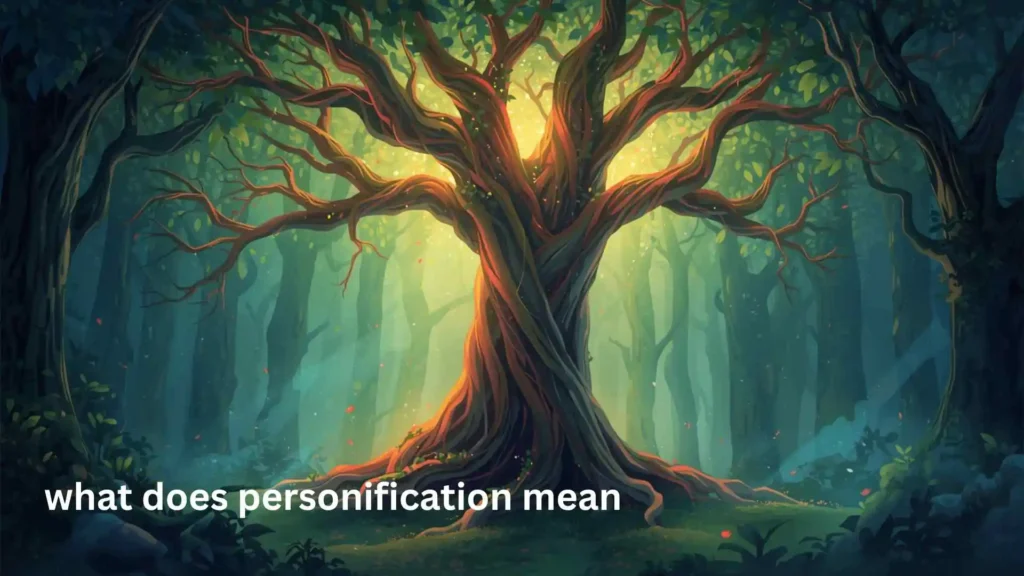
Personification means giving human qualities, emotions, or actions to animals, objects, ideas, or nature.
For example, saying “the sun smiled down on us” is personification because the sun cannot actually smile like a human.
People use personification to make language more vivid, emotional, creative, and easier to imagine.
Meaning & Definition
Personification is a figure of speech where non-human things are described as if they are human.
It helps readers connect emotionally with ideas and creates stronger mental images.
Primary Meaning
The main meaning of personification is giving human traits to things that are not human.
Examples:
- “The flowers danced in the wind.”
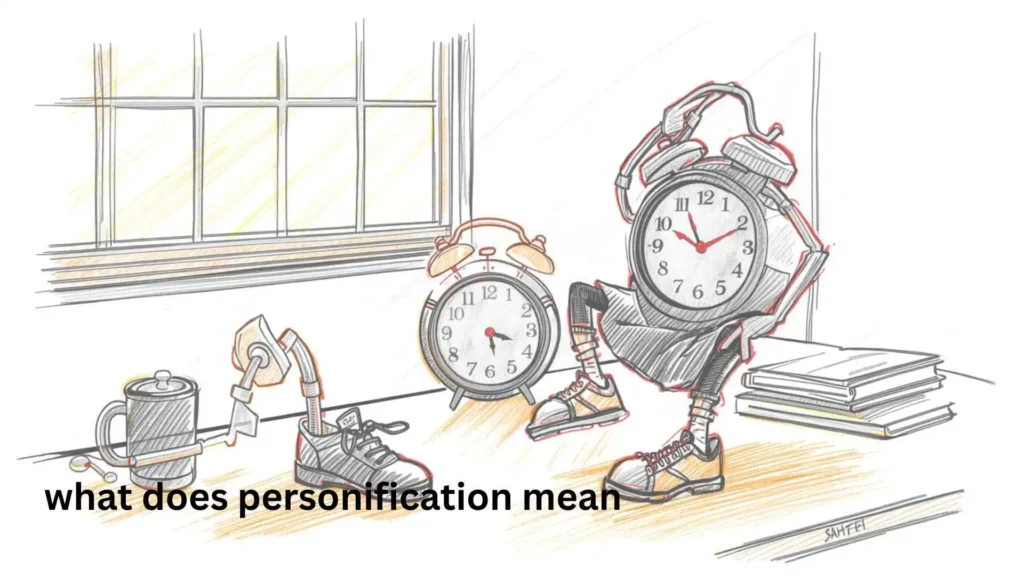
- “The alarm clock screamed at me this morning.”
Flowers cannot dance, and clocks cannot scream, but the sentences feel more alive and expressive.
Secondary Meaning
Sometimes people use personification casually in everyday speech without thinking about grammar or literature.
For example:
- “My laptop is begging for a break.”
- “Traffic was angry today.”
These phrases are not literal, but they make conversations more fun and relatable.
Real Chat Examples
Friend 1: “Why are you late?”
Friend 2: “My car decided to give up on life.”
Text Message:
“Monday mornings attack me every week.”
Both examples use personification humorously.
Background & Origin
Personification comes from the Latin word persona, meaning “person” or “human character.”
Writers in ancient Greece and Rome used personification heavily in myths and storytelling.
Over time, poets and authors started using it to create emotional depth.
Today, personification appears everywhere:
- Song lyrics
- TikTok captions
- Instagram quotes
- Advertising slogans
- Memes
- Movies
- Daily conversations
It became especially popular online because dramatic wording gets more attention and feels emotionally relatable.
Usage in Different Contexts
Casual Chats
People use personification jokingly in normal conversations.
Examples:
- “My bed is calling my name.”
- “Coffee saved my life today.”
- “My internet died again.”
These phrases make conversations sound emotional and expressive.
Social Media
On platforms like TikTok and Instagram, personification is used for humor, aesthetics, and relatable content.
Examples:
- “My anxiety said good morning before anyone else.”
- “The weather is personally attacking me.”
These dramatic expressions often become viral memes.
Professional Use
In marketing and advertising, brands use personification to sound emotional and memorable.
Example:
- “Your skin will thank you.”
- “Let your car breathe.”
This style creates emotional connection with customers.
Gaming & Group Chats
Gamers often personify technology or games.
Examples:
- “The server hates me.”
- “My controller gave up.”
It adds humor and frustration in a relatable way.
Meanings Across Platforms
| Platform | Tone | Example |
| Casual | “My battery is crying.” | |
| Emotional/Aesthetic | “The moon watched over me.” | |
| TikTok | Funny/Relatable | “Homework attacked my peace.” |
| Snapchat | Playful | “My phone is acting jealous.” |
| Discord | Gaming Humor | “The game punished me today.” |
Real-Life Examples & Memes
Here are some common modern examples of personification:
- “The stars danced tonight.”
- “My wallet is screaming.”
- “Sleep keeps avoiding me.”
- “The rain knocked on my window.”
Meme-Style Examples
- “My brain at 3 AM: let’s remember embarrassing moments.”
- “The fridge light judging me again.”
These funny lines are popular because they turn normal experiences into emotional stories.
Cultural or Regional Interpretations
US & UK
In English-speaking countries, personification is common in literature, advertising, and humor.
British humor often uses dry sarcasm:
- “The weather decided to ruin my plans.”
American social media uses dramatic emotional styles:
- “Life punched me in the face today.”
Asia (India, Pakistan, Philippines)
In South Asian cultures, personification is common in poetry, songs, and emotional storytelling.
Examples:
- “The night cried with me.”
- “Destiny smiled upon us.”
Urdu and Hindi poetry especially use personification beautifully.
Australia
Australians often use personification humorously and casually.
Example:
- “The sun is trying to kill us today.”
Other Meanings
| Field | Meaning | Description |
| Literature | Figure of speech | Giving human traits to non-human things |
| Poetry | Emotional imagery | Makes writing vivid and expressive |
| Advertising | Marketing technique | Creates emotional brand connection |
| Psychology | Human projection | People emotionally connect with objects |
| Religion/Mythology | Symbolic representation | Nature or ideas described as human |
Common Mistakes & Misconceptions
- Thinking personification and metaphor are exactly the same
- Believing every descriptive sentence is personification
- Using too much personification in formal writing
- Confusing personification with symbolism
- Taking figurative language literally
Psychological / Emotional Meaning
Personification works because humans naturally connect emotionally with human behavior.
Positive Tone
Examples:
- “Hope held my hand.”
- “The sun welcomed us warmly.”
These feel comforting and uplifting.
Neutral Tone
Examples:
- “Time moves quickly.”
- “The wind carried leaves away.”
These simply create imagery.
Negative Tone
Examples:
- “Fear followed me everywhere.”
- “The storm attacked the town.”
These create tension or sadness.
Similar Terms & Alternatives
| Word | Meaning | Tone |
| Metaphor | Direct comparison | Creative |
| Simile | Comparison using “like” or “as” | Descriptive |
| Imagery | Descriptive language | Visual |
| Hyperbole | Extreme exaggeration | Dramatic |
| Symbolism | Using symbols for ideas | Deep/Emotional |
Is It Offensive or Friendly?
Personification itself is usually friendly and harmless.
However, tone matters.
Friendly Example
- “My coffee loves me today.”
Sounds playful and relatable.
Negative Example
- “Depression follows me everywhere.”
This can feel emotionally heavy or serious.
Context always matters online and in conversations.
Grammar or Linguistic Insight
Personification is part of figurative language.
It changes ordinary language into emotional or imaginative language.
Humans naturally understand emotions better than abstract ideas, so personification makes writing easier to connect with emotionally.
That’s why songs, poems, and social media captions use it so often.
How to Respond
If someone uses personification casually, here are natural replies:
- “That’s honestly relatable.”
- “Your phone really sounds dramatic.”
- “Mood.”
- “I feel that.”
- “That sentence deserves an award.”
Differences From Similar Words
| Term | Difference |
| Personification | Gives human traits to non-human things |
| Metaphor | Compares two things directly |
| Simile | Uses “like” or “as” for comparison |
| Hyperbole | Exaggerates something dramatically |
| Irony | Opposite meaning for humor/effect |
Relevance in Dating & Online Culture
Modern dating culture uses personification constantly.
Especially on apps like Tinder, people create funny bios using dramatic language.
Examples:
- “My toxic trait is thinking my bed misses me.”
- “My playlist understands me better than people.”
Gen Z humor heavily relies on emotional exaggeration and personification because it feels relatable and meme-worthy.
Popularity & Trends
Personification has exploded online thanks to meme culture and short-form content.
On TikTok, emotional captions perform well because they feel cinematic and relatable.
Examples like these go viral quickly:
- “The universe tested me today.”
- “My motivation disappeared.”
Songs, reels, and memes all use personification to create emotional storytelling in just a few words.
When NOT to Use Personification
There are situations where personification may sound confusing or unprofessional.
Avoid it in:
- Legal documents
- Scientific reports
- Academic definitions
- Serious business emails
- Technical instructions
Example to Avoid
Instead of:
- “The computer refused to cooperate.”
Use:
- “The computer stopped working.”
Formal writing should stay clear and direct.
FAQs
What does personification mean in simple words?
Personification means describing something non-human as if it were human.
Example: “The flowers danced in the wind.”
Why do writers use personification?
Writers use personification to make language emotional, vivid, and easier to imagine.
Is personification a metaphor?
Not exactly. Personification is a type of figurative language that specifically gives human traits to non-human things.
Can personification be used in everyday speech?
Yes. People use it all the time in jokes, memes, captions, and conversations.
Is personification positive or negative?
It can be positive, negative, or neutral depending on the context and emotion being expressed.
Conclusion
Personification is more than just a literary device.
It’s part of how people naturally express emotions, humor, stress, and imagination every day.
From poetry and songs to memes and TikTok captions, personification helps ordinary words feel alive.
The next time someone says “my phone hates me” or “time flies,” you’ll instantly recognize the creativity behind it.
And honestly, language becomes a lot more fun once you start noticing it everywhere.
Discover More Topics:
- What Does WTM Mean? The Real Meaning in Text, TikTok & Chats in 2026
- What Does Crash Out Mean? The Real Meaning Behind This Viral Slang in 2026

Oliver Sinclair
I’ve always been fascinated by the way words can dance and paint pictures in the mind. Similes and metaphors, to me, are more than literary tools—they are bridges between ordinary language and extraordinary imagination. Writing has been my way of exploring emotions, nature, and the hidden connections that often go unnoticed. Every sentence I craft is an experiment, a little spark of creativity meant to make readers see the world differently. When I’m not lost in words, you can find me wandering through forests or sketching ideas in a notebook. Sharing the magic of language has always been my greatest joy, and I hope my work inspires others to play with words too.
Books:
-
Whispers in the Wind
-
Shadows of Thought